
A small fish had a big problem.
His pool was shrinking.
All through the dry season, the marsh had been handing its water back to the sky. Every morning the edges crept a little closer. Now the pool was the size of a puddle, the puddle was getting smaller, and the sunfish was running out of room to be a fish in.
Up in the cypress branches, the wading birds were talking.
"The deep pond stays wet," said a heron. "It always stays wet."
"Whose pond is it?" asked the sunfish, from below.
The birds ruffled their feathers. "The alligator's."
Everyone in the marsh knew the alligator.
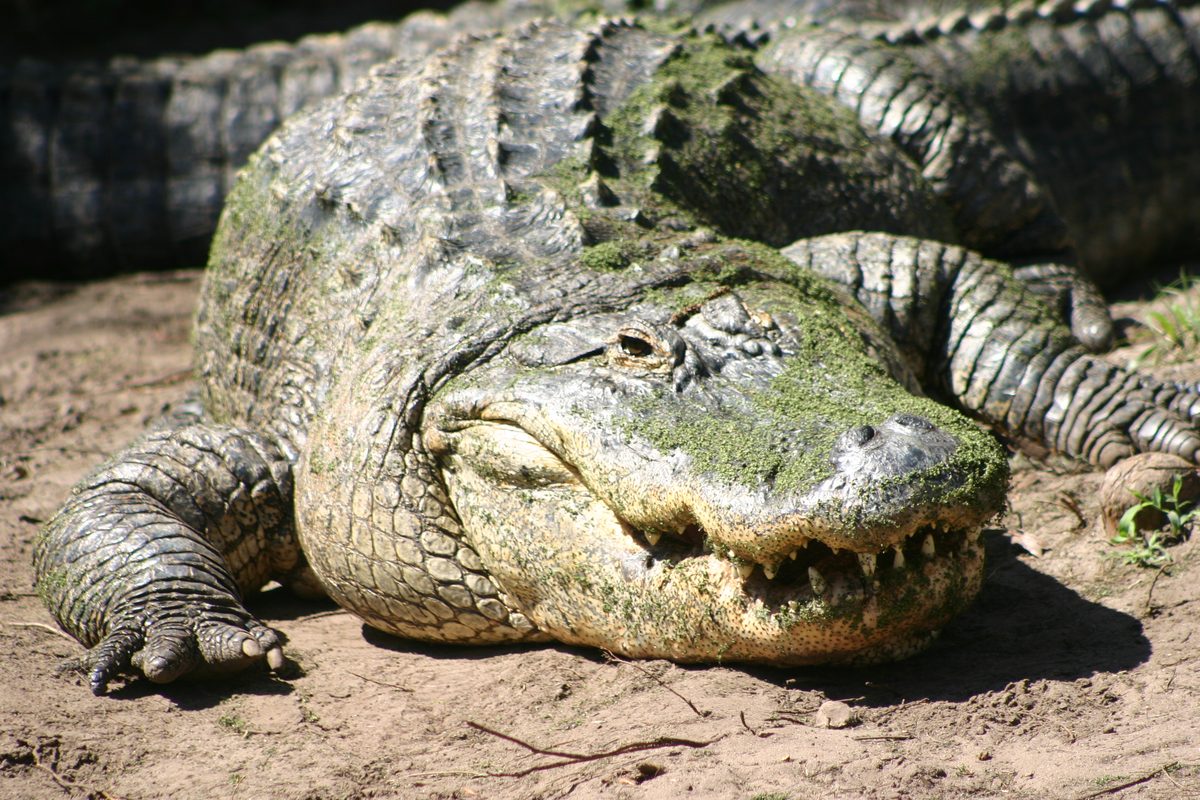
He was more than three meters of muscle and armor. He had about eighty teeth, and whenever one wore out, a new one grew in to take its place, which is a thing alligators can truly do, their whole lives long. In springtime he bellowed so deep and so low that the water above his back leapt and danced and sparkled like rain falling upward.
He was, in short, the scariest neighbor in the Everglades.
The sunfish flicked his fins and did the math. The puddle meant certain trouble. The pond meant possible trouble. Possible beats certain.
He wriggled down the last wet channel and slipped into deep, cool, wonderful water.
The pond was full of neighbors. Fish of every size. Turtles dozing on the bank. Snails minding their own business. And below them all, resting on the bottom like a sunken log, lay the owner himself.
Here is what the sunfish learned that long dry season.
The alligator had dug the pond himself. Years ago, he had swept the muck away with his wide snout, pushed with his clawed feet, and swirled his great tail, down and down, until he reached water the dry season could never steal. And he kept the pond open, year after year, tending it the way a keeper tends a well.
When the marsh dried, his pond held.
Did he hunt in it? He did. He was an alligator, and alligators eat, and every creature in that pond kept a respectful distance and one watchful eye. That is the old bargain of the marsh, and everyone in the marsh knows it.
But here is the part the birds still sing about.
Because of his pond, the fish lived through the drought. Because the fish lived, the herons and the storks could feed their chicks. Because one animal dug one deep hole, a thousand small lives made it through to the rain.
And the rain did come. One afternoon, thunder cleared its throat. The sky turned purple, then silver, then loud, and the water came home to the Everglades.
The marsh filled. The sunfish swam out across the drowned mud, fat and alive, into a world of water without walls.
Behind him, in the deep pond, the alligator rose until only his eyes showed, and he watched the rain patter down on his kingdom.
Scariest neighbor in the marsh. Keeper of the last pond.
Both, it turns out, can be true at once.