
_feeding_underwater_off_Fernandina_Island,_Galápagos_Islands.jpg)
On the black lava rocks of the Galapagos Islands, the tide was keeping a secret.
A young marine iguana lived on those rocks with hundreds of her kind, all of them dark as the lava itself, warming shoulder to shoulder in the morning sun.
Lizards everywhere live by one comfortable rule: stay warm, stay dry.
Her family had invented a braver rule: the sea is a garden.
She ate seaweed, the soft red and green kinds that grow where the ocean meets the island. At low tide she grazed the wet rocks along the shore, nibbling like a very small cow with claws.
But this year the tide's secret was a hard one. The water had come in warm, and warm water is tough on seaweed. Day by day, the green garden of the shore grew thinner.
So the young iguana watched the big males do the thing that only marine iguanas, of all the lizards in the world, can do.
They lay flat on the black rock until the sun filled them with heat, like charging a battery. Then they walked into the waves and swam, legs folded against their sides, flat tails sweeping side to side, out past the foam.
And they dove.
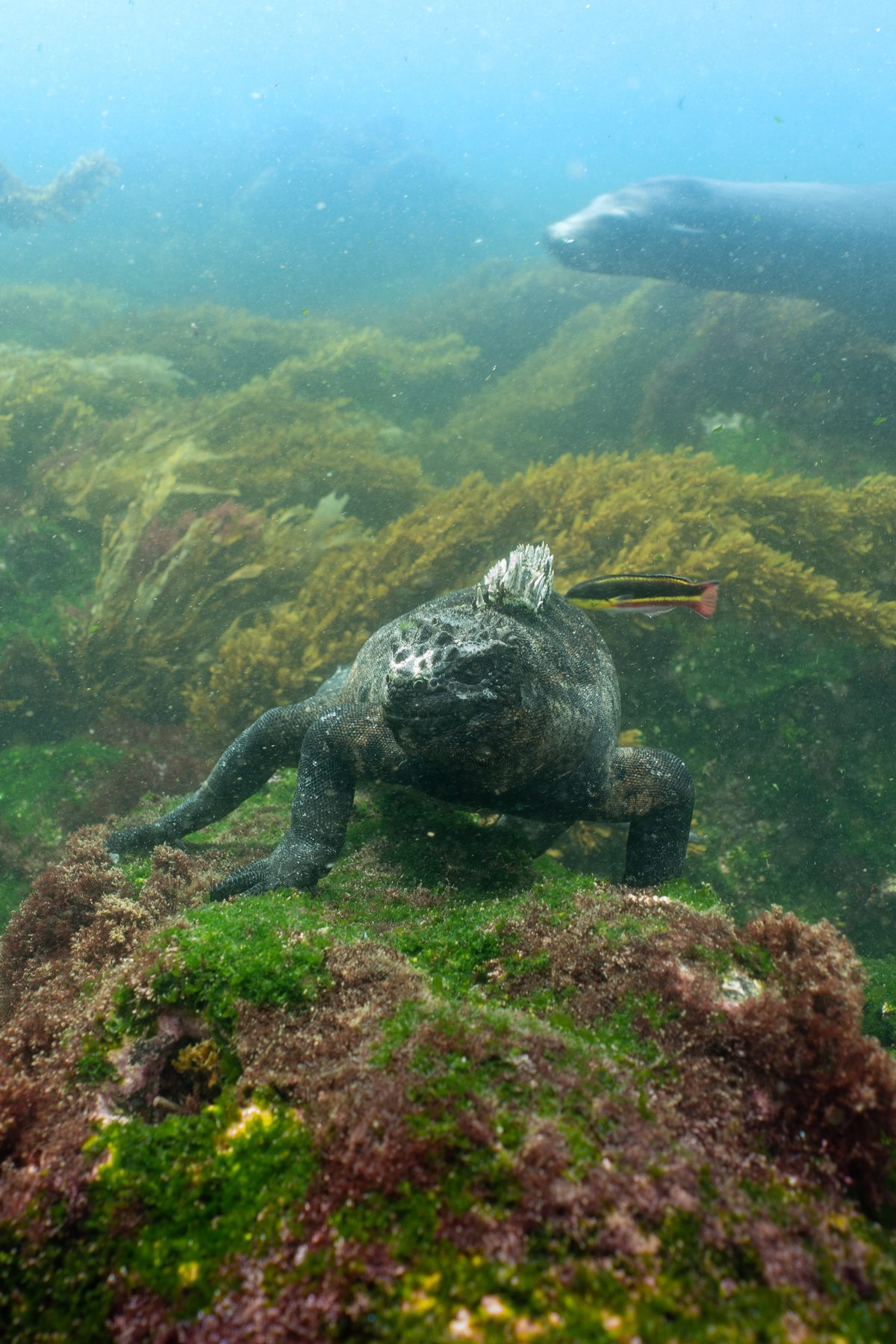
Down where the light turns green and the water turns cold, whole meadows of seaweed still swayed. The big males hooked their long claws into the rock and held on while the surge pulled and pushed. They grazed, calm and slow, hearts beating softer to guard their warmth, holding their breath for many minutes at a time.
The young iguana made her choice.
Morning. Sun. Black rock. She lay flat and let the heat soak all the way in. Warm first. That was the first lesson.
Then she slipped into the waves.
The cold wrapped around her. She swam anyway, nose forward, tail working, down along a rock wall until she found a patch of green.
She hooked in her claws.
She ate.
When the cold grew too big for her, she pushed off, rose into the sparkle, and rode the waves home. Back on the lava she stretched out beside the others, and soon the whole shining crowd was doing the funny thing marine iguanas do.
They sneezed.
Tiny white puffs of salt from their noses, the sea's leftovers, until every head wore a little salt crown.
Here is a secret to keep in your pocket: scientists admire these lizards so much that one kind of marine iguana is officially, truly, scientifically named godzilla. It is written in the books exactly like that.
The warm season passed, as warm seasons do. The garden grew back, and the young iguana grew with it, bigger and bolder, a dragon of the tide pools.
She is the only kind of lizard on Earth that dines beneath the sea.
Being the only one takes courage.
And being the only one is how every wonderful new thing begins.