
.jpg)
Here is a secret, and you may keep it: in the canals of one old lake in Mexico, there lives a salamander who stays young forever.
The lake is called Xochimilco, and it laps at the edge of Mexico City, threaded with quiet canals and floating gardens. Down in the cool green water lives the axolotl, a little shorter than a school ruler, dressed in the colors of mud and shadow, which is excellent for hiding.
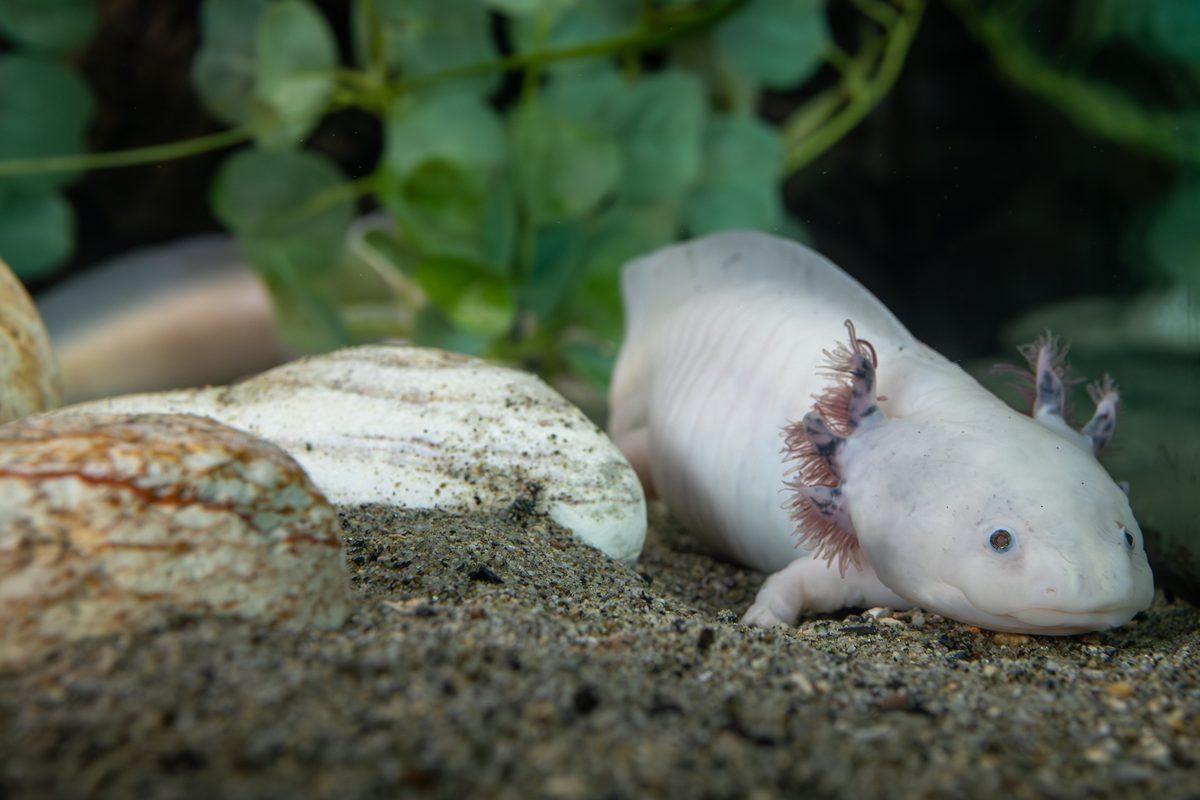
Six feathery gills wave around her head like fern fronds, three on each side. Her mouth curves in a small, permanent smile. The Aztec people named her kind long ago, after Xolotl, a god of their old stories.
Most salamanders grow up, leave the water, and walk away into the wet grass. The axolotl keeps her gills, keeps her water, and stays a water baby all her life. Scientists call it staying young. The axolotl calls it knowing a good thing when you live in it.
One morning, a white shadow crossed the water.
A heron.
A stab of a long beak, a swirl of mud, and the axolotl shot under the roots of a floating garden. She was safe in the dark.
Her left front foot stayed behind.
Now, here is what the lake has always known about the axolotl.
First her skin closed over the hurt, quick and clean. Then something began that looks like magic and is really patience. A small soft bud formed where the foot had been, like the tip of a growing plant.
Week after week, the bud remembered what a foot should be.
Bone grew inside it. Muscle wrapped the bone. Nerves threaded through like fine roots.
One small toe. Then another. Then two more.
A new foot. A whole foot. As good as the first.
While she waited, she lived her quiet life. She drifted close to a worm, then opened her mouth so fast that the water rushed in and carried dinner with it. She rose, now and then, to sip a bubble of air at the surface. She smiled her always smile, because her face is made that way.
And if she ever loses that foot again, she can grow it again. And again after that. Her body keeps the instructions and knows every page by heart. Scientists visit her lake and study her still, hoping to learn how she heals, so that one day people might heal that way too.
Wild axolotls live in this one lake and its canals, and only here. People in Mexico City work to keep the water clean and green for them, because a lake that holds the secret of healing is worth keeping.
Some magic is loud. Hers is slow and real. Broken, for an axolotl, is simply a place to begin.
Night settles over the floating gardens. Down in the dark, resting on soft mud with all four feet beneath her, the little water creature smiles her small, patient smile, young as ever, whole as ever, waiting for morning.