
.jpg)
Something was wrong with the little bird under the roof tiles.
She would not walk.
Not could not, exactly. Her feet were small and curled, built for gripping a ledge, not for hopping across a garden the way the sparrows did. When she tried, she toppled onto her front like a paper boat in a puddle.
The sparrows found this very funny.
She did not.
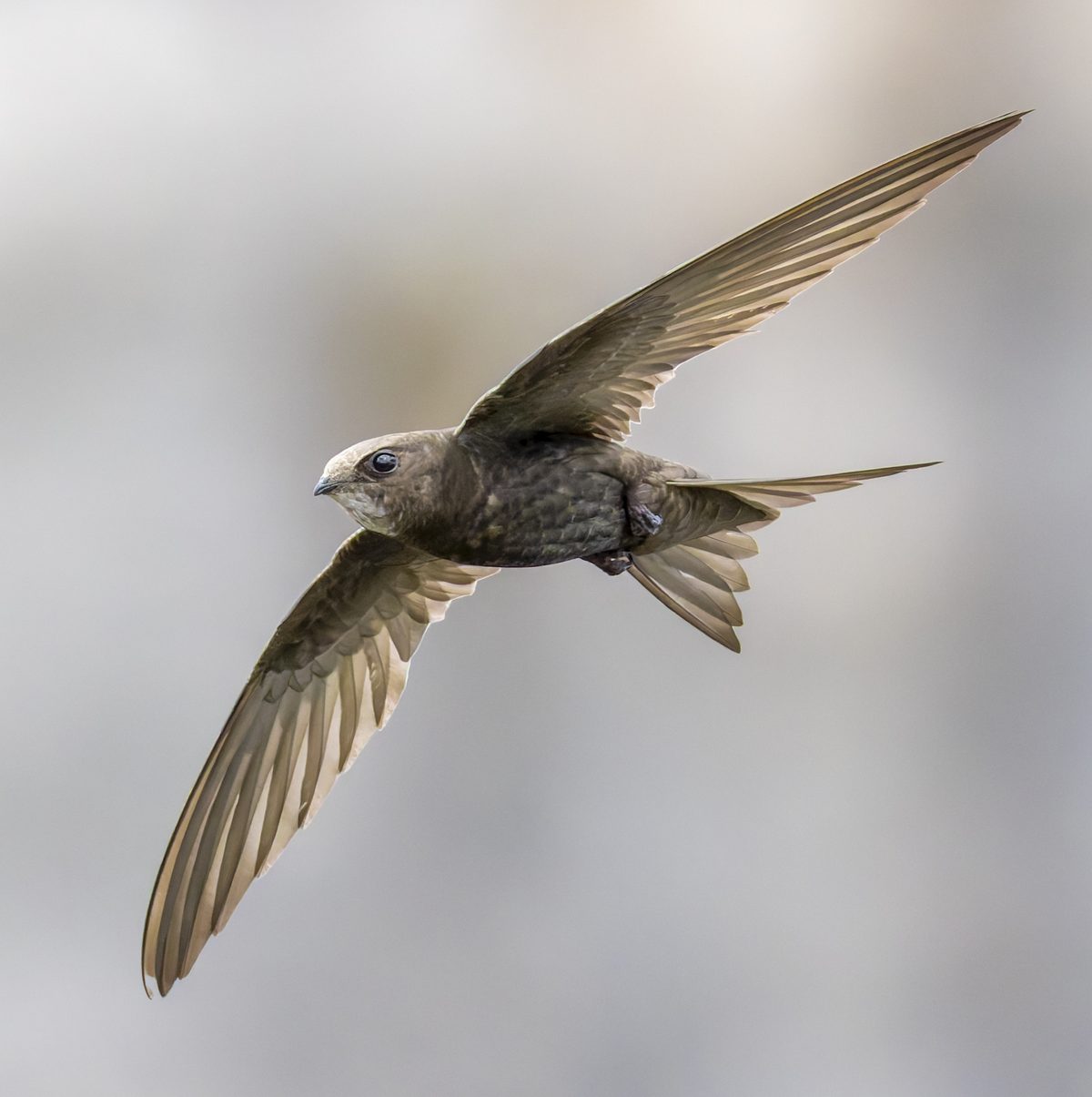
But her wings were another matter. Long. Narrow. Curved back like two small scythes. When she finally tipped off the ledge into the summer air over the rooftops of a town somewhere in Europe, something in her changed completely.
She did not come back down.
Not that evening. Not that week.
She caught her first meal without ever touching a branch, snapping tiny insects out of the air, swallowing as she flew. She drank by dropping low over a pond and skimming the surface with her open beak, never once folding her wings.
At dusk, she found the others.
They came together over the rooftops in a loose, shrieking crowd, cutting past chimneys so close their wingtips nearly touched, calling to each other in short, high screams. Nobody in the crowd knew her. She was just one more shape among hundreds.
Nothing that made her different.
Then autumn came, and the whole crowd turned south together, and kept going, over sea, over desert, all the way to the plains of Africa for the winter. She flew every one of those kilometres on her own wings, and when the ground fell dark beneath her at night, she climbed.
Higher.
And higher.
Up where the air went cold and still, she found she could glide in slow circles, half asleep, waking herself just enough to steer. Nobody had taught her this. Her body simply knew.
The first winter, she was still the smallest, quietest voice in the crowd.
By the second winter, she could hold her place inside a screaming party without being chased to the edge of it, wingtip to wingtip with birds far older than her, the whole loose crowd bending as one when she bent.
Nobody made room for her before. Now they simply did not close the gap.
By the third summer, when the swifts came screaming back over the rooftops of the town where she was born, something in her turned toward home.
She circled the old roofline twice.
Then a third time, lower.
Below her, the very same gap under the tiles was waiting, dark and narrow, exactly as she had left it years and thousands of kilometres ago.
She folded her scythe wings tight, and dropped, and for the first time since she had tipped off that ledge as a fledgling, her curled little feet touched something solid.
It held her weight.
It felt strange, and small, and completely right.
Above the rooftops, the evening crowd was already gathering, screaming their way past the chimneys the way she once had, unknown among hundreds.
She would join them again tomorrow, and be gone for another ten months without ever landing.
But tonight, tucked into her dark gap in the tiles, the bird who had barely touched the ground in years listened to the wind moving over a roof she had carried with her the whole time, in a place wings cannot reach.