
Something moved in the river, and the young basilisk on the low branch went very still.
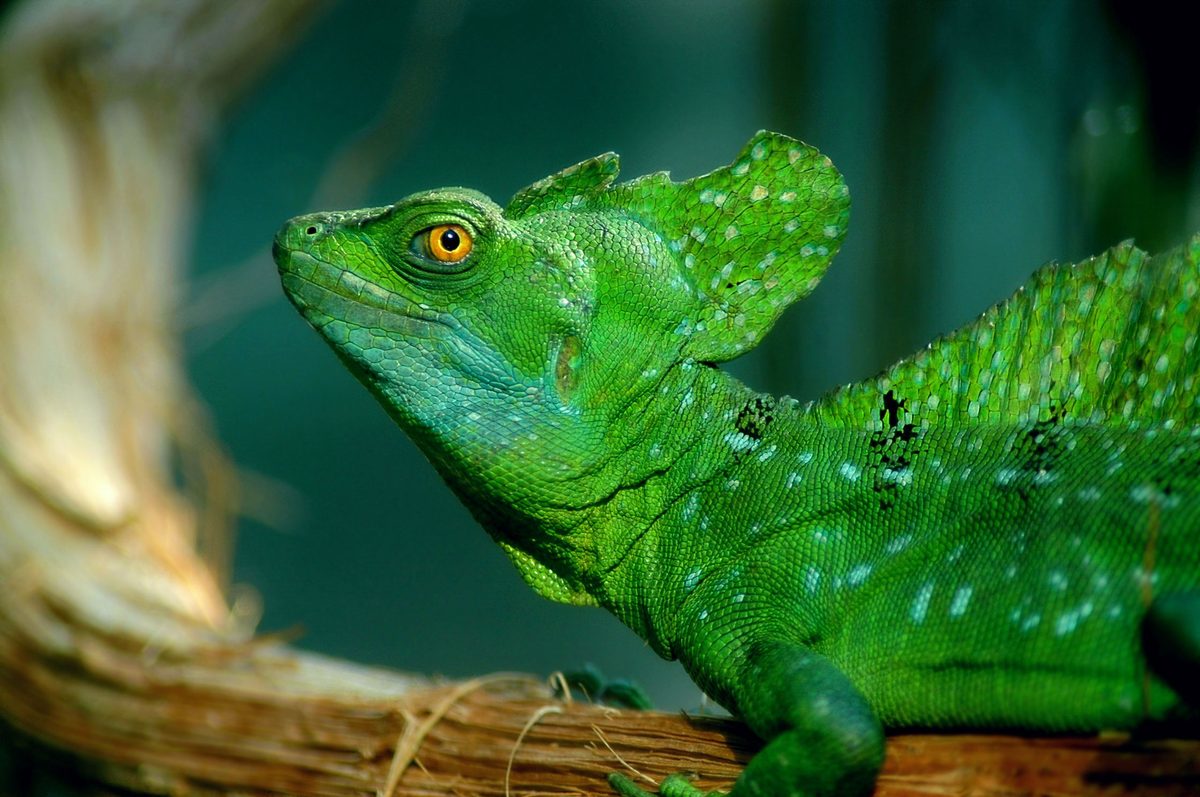
He was green, the exact green of the leaf beside him, though nobody watching the water below was thinking about leaves.
This was Costa Rica, where the river forest stays warm and wet all year, and every basilisk who lived along it knew the water in both directions. Safe to drink from. Never, ever safe to sit still beside.
He had no crest yet. The older males wore tall combs of skin down their heads and along their backs, crowns any basilisk could spot from clear across the water. His own head was smooth.
Not yet a king. Just a boy with long back toes and longer legs.
Below, the water folded strangely, once, and went smooth again.
He was small next to the big males dozing along this stretch of bank. But the big males carried the most weight too, crest and all, and everyone knew what extra weight meant for a basilisk trying to cross open water in a hurry.
They sank early.
He had watched an old male attempt the crossing once, all pride and paddling legs, going under after only a few strides, swimming the long way, grumbling the whole time.
Nobody had ever seen the young ones try.
The water folded again, closer this time.
There was no time to climb higher and no time to think about crests he did not have. There was only the trunk under his back feet and the whole flat shine of the river in front of him.
He ran.
His back legs did the work, long toes spread wide, fringed like little fans along each one, and where those toes struck the water they trapped a pocket of air beneath his foot before he could sink through it.
Slap.
Slap.
Slap.
Each strike came faster than the water could swallow him, faster than he had ever run on solid ground, and the river held him up the way a trampoline holds a jump.
He was running on top of the world.
Behind him, something broke the surface where he had just been standing.
He did not look back. He kept his eyes on the far bank and his feet slapping, and stride after stride the water kept its promise and held.
For a few metres, and then a few more, the young basilisk with no crest weighed exactly enough, and not one gram more, and it was the most useful thing about him.
Then his strides slowed, the way they always must, and the river remembered what it was, and he went under.
He came up swimming, easy and unhurried now, because the danger was a long way behind and swimming had never been the hard part.
He climbed out on the far bank, dripping, alive, and shook the water from a head that had no crest on it yet.
An old male watched him from a low branch, silent.
The young basilisk climbed up beside him anyway, found his own patch of sun, and did not explain himself.
He did not need a crown to cross a river.
He only needed to be exactly as light as he already was.