
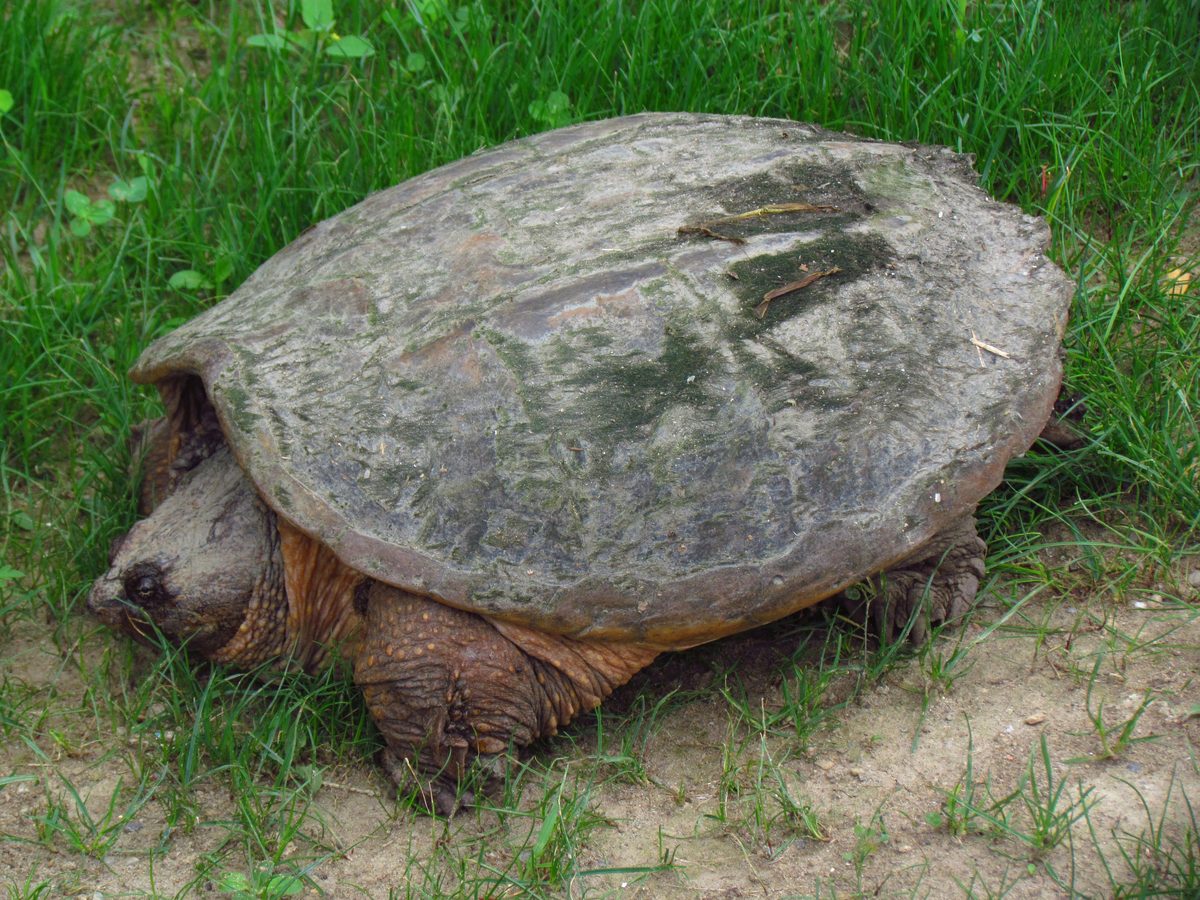

Something in the pond always made the other animals step wide around one dark shape near the reeds.
It was not fear of teeth. Snapping turtles have none.
It was the bite.
She could not pull all the way into her shell the way some turtles could, so when danger came close on land, she met it the only way she had: fast, low, and sure.
Frogs remembered that bite. Herons remembered it. Even the dogs that wandered down from the nearby farm remembered it, and gave her the whole width of the bank.
But that was the turtle on land, and the turtle on land was only half the story.
Underwater, she was almost nothing at all. A shape in the mud. A shadow that did not hurry.
She ate what the pond offered that week and never fussed about it, tender water plants, a slow fish, a frog that swam too close, once, the remains of something that had not made it through the last cold snap. She was not picky. She was patient, and patience, in a pond, feeds a turtle just as well as speed does.
Early summer, she left the water the way she did every year, walking a long way over open ground toward a stretch of loose, sun warmed soil, the kind that held its heat.
On land, she moved slow and low, her long tail dragging its ridge of saw toothed bumps through the dirt behind her. Any dog that came near learned again what her bite meant. Any fox thought better of it too.
She dug with her back feet until the hole was deep enough, and laid about thirty round white eggs into it, and covered them over, and turned back toward the water without looking back, the way her mother had, and her mother before that.
The sun would do the rest. The coolest nests and the warmest nests each raised mostly daughters. The nests in between raised mostly sons. She had no say in it, and needed none.
Then the year turned toward cold.
The pond went still on top first, a skin of ice thickening night by night, and every creature that could leave, left. Frogs buried into the bank. Fish went slow and deep. The last dragonflies vanished as if they had never been.
She did not leave.
She sank instead, down into the soft mud at the bottom, and let her whole body slow with the water around her, heartbeat by heartbeat, until she needed almost nothing at all.
What little air she needed, she no longer rose for. She drew it in through the thin skin of her throat, through her own skin, straight from the cold water itself, the way no bite and no speed could ever manage.
Above her, the ice thickened into a roof over the whole pond. Snow came and sat on top of that. Months passed this way, dark and slow and silent.
She was not waiting to be rescued. She had never needed rescuing.
When the ice finally opened again, thin and gray at first, then bright, she rose up through it unhurried, into a spring morning that had no idea she had been there the entire time.
A heron on the bank startled and stepped back, remembering the old story about her bite.
She only wanted the sun.
On land, she carried a fast and certain answer to danger. Underwater, she carried something slower and far harder to see: a whole winter spent breathing through nothing more than her own patient skin, in the dark, in the cold, and never once in trouble.