
Deep beneath the warm sand of an African riverbank, a song was starting.
It was a tiny song. A squeaky, peeping, chirping song, sung by many small voices at once.
It was coming from inside the eggs.
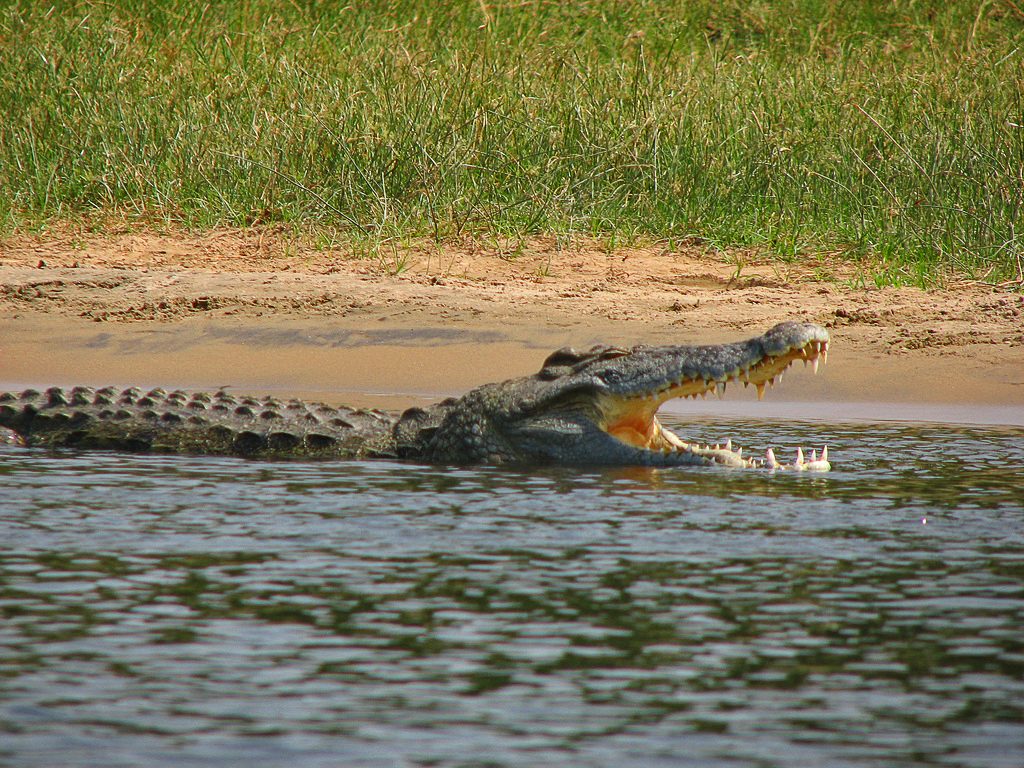
Up on the bank, the river went about its morning. Hippos grumbled somewhere upstream. A fish eagle cried high overhead. And in the shade beside one patch of sand, exactly where she had stayed for about three months, lay the crocodile.
She had guarded that patch through blazing sun and hammering rain. She had hardly left it, even to eat. When a hungry monitor lizard came sniffing around for eggs, she rose up hissing like a kettle with opinions, and the lizard decided, wisely, to be somewhere else.
The other animals of the river had all kinds of thoughts about her.
They knew about her jaws. Everyone knew about her jaws. The biggest Nile crocodiles grow about five meters long, and a crocodile's bite is one of the strongest ever measured in the living world. When those jaws closed, the whole river paid attention.
So when the sand began to sing, the watchers on the far bank went very quiet.
The chirping grew louder. Peep. Peep. Peep. Inside their hard white eggs, dozens of little crocodiles were calling, all together, the way their kind has called for millions of years: We are ready. Come and find us.
Their mother heard them through the sand.
She rose. She crossed to the nest and began to dig, scattering sand with her front feet, sweeping it aside with her snout. Careful. Careful. Down to the warm hollow where the eggs lay waiting.
Then she did the thing that scientists who study crocodiles still describe with wonder.
She opened her enormous jaws, jaws built for crunching bone, and lifted an egg as lightly as a feather landing. She rolled it gently between her tongue and the roof of her mouth until the shell cracked, and a tiny crocodile tumbled out, blinking at its very first morning.
One by one, she gathered her hatchlings into the soft pouch of her lower jaw, a living boat with teeth for railings, until little heads and tails peeked out on every side. Then she walked down the bank, lowered her chin into the shallows, and let her babies swim out into the river she had known all her life.
For weeks she stayed near them, floating like driftwood, while they practiced being crocodiles, snapping at dragonflies and paddling between the reeds. When one peeped in alarm, she was there before the ripples faded.
That evening she floated in the last gold light, and a few of her babies, each one about as long as a school ruler, rode on her back like sailors on a friendly ship.
The watchers on the far bank finally understood.
The strongest jaws on the river had waited three months for their most important job. And the most important job was to hold something softly.
Real strength has known that secret all along.