.jpg)
The big stranger arrived at dawn, and by sunset the young crocodile knew it was time to go.
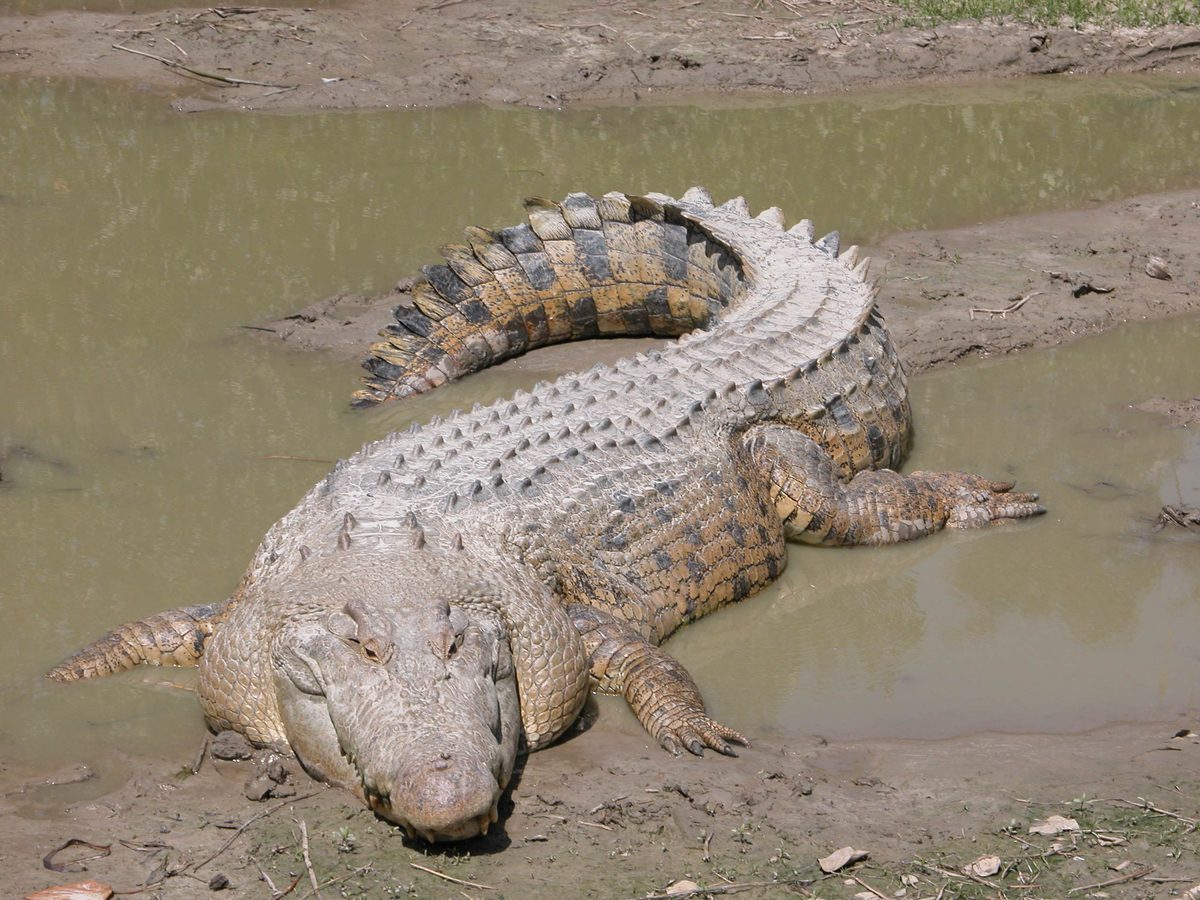
The stranger was enormous, the kind of crocodile other crocodiles tell stories about, as long as a small boat, with a rumble in his chest that made the water shiver. The deep pool belonged to him now. That is the way of crocodile rivers. The biggest male keeps the best water, and young males set out to find their own.
So the young crocodile slid downstream, past the last mangrove trees, to the place where the river opened its arms and became the sea.
He floated there with only his eyes and nostrils above the water.
The sea was huge. The sea was salty. The sea did not care.
Good thing he was a saltwater crocodile. Special glands on his tongue quietly carried the extra salt away, so he could travel where freshwater animals never could.
Somewhere out there was an empty river, waiting for him. He just had to reach it.
He swam. And swam. His long tail swept side to side, strong as an oar. But when the sun went down, he lifted his head and saw the same headland in the same place, as if he had swum all day and gone nowhere.
Something was wrong with the sea. Or something was wrong with his plan.
He floated, thinking. Crocodiles are patient thinkers.
Then a log drifted past him, going the other way, gliding fast without moving a single branch.
The young crocodile watched it shrink into the distance.
"The log is lazy," he said slowly, "and the log is winning."
That was the secret. The sea has rivers of its own, wide invisible currents that slide along the coast. Fight them, and you go nowhere. Ride them, and you fly.
So he stopped fighting.
When the current ran his way, he spread himself out like driftwood and let it carry him, mile after easy mile. When it turned against him, he pulled into a quiet bay and rested, saving his strength until the water swung around again.
A white tern landed near him one afternoon. "Going somewhere?" she asked.
"Everywhere," said the crocodile.
He rode the sea for days. Scientists who follow saltwater crocodiles with satellite tags have watched them travel this way for hundreds of kilometers, surfing the currents from one coast to another.
And then one morning he smelled it. Fresh water. Mud. Mangroves. A small green creek wound inland, with fish flicking in the shallows and no rumble of any big male anywhere.
He drifted in with the tide.
The creek was quiet. The creek was warm. The creek was his.
He hauled out on a sunny mudbank, closed his eyes, and let the long journey drain out of his tired legs.
The strongest swimmer in the sea is the one who knows when to stop swimming.
The waves do the rest.