
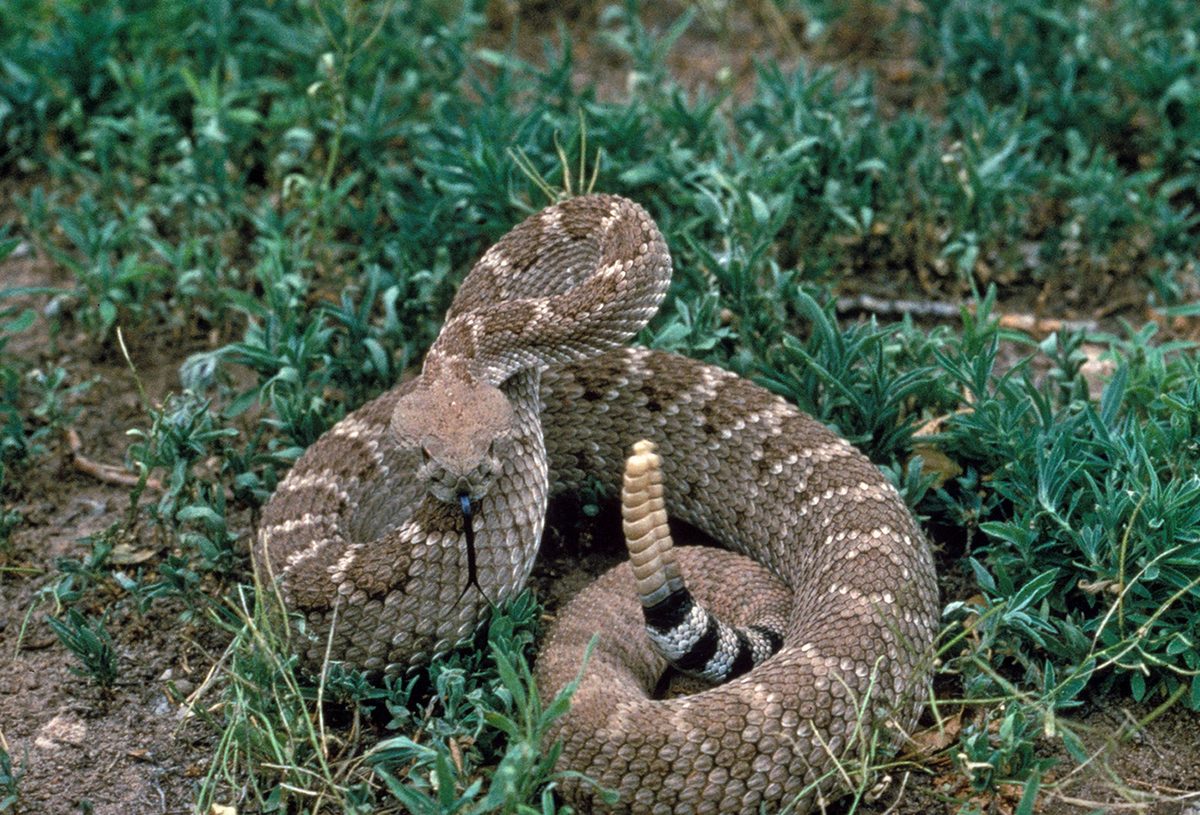

Out in the scrubland of the American southwest, a diamondback lay coiled beneath a creosote bush, feeling the desert through the ground.
Two small pits sat between her eyes and her nostrils, and they did something her eyes could not. They felt heat. A kangaroo rat moving through the dark thirty centimetres away arrived to her as a small warm shape, glowing against the cool sand, long before she could have seen it at all.
She went still.
Stillness filled most of her hours, stillness and the patient read of every warm shape crossing the sand.
The kangaroo rat came closer, unaware, nose twitching at something in the sand. The diamondback's strike, when it came, was over before the rat had time to be afraid. Quick. Certain. Done.
She rested afterward, coiled loosely, letting the desert cool around her.
That was when the ground began to shake, not from her, but toward her. Heavy footsteps. A coyote, young and careless, trotting straight along the wash without looking down.
The diamondback did not want a fight. A fight cost too much, for a snake or for a coyote, and neither of them needed one.
So she rattled.
The tip of her tail blurred into a sound like dry seeds in a gourd, fast and steady, coming from muscles built to move faster than almost anything else alive. Ninety times in a single second. She could hold that pace far longer than the coyote could hold its curiosity.
The coyote froze mid-step.
Its ears swivelled toward the sound.
It did not come closer.
The diamondback kept rattling, patient as the desert itself, and the coyote weighed the warning the way any smart animal weighs a warning it has heard before. It backed away, slow at first, then turned and trotted off toward easier ground.
She let the rattle wind down, segment by segment of sound fading into the evening.
She had been rattling for the better part of an hour, and her tail was not even tired. It never really got tired. That was the strange gift built into her, muscles that could keep working long after most animals would have to stop and rest.
Later, curled beneath a flat stone as the desert cooled toward night, she felt the small stirrings against her own body. Her young were coming soon, not in eggs left behind in the sand, but born live, ready to hunt from their very first hours.
Each one of them would carry an empty button at the tip of its tail, silent for now.
Every time they shed their skin, one more dry segment of keratin would click into place, small and hollow, waiting for the muscle beneath it to learn its rhythm.
A voice built one shed at a time.
The diamondback settled deeper into the cooling sand, her own rattle quiet again, and let the desert night close in around her family. Somewhere out past the creosote, the coyote was already hunting something else, having listened, and having learned, and having lived to trot another evening.
She had not needed to bite at all.
She had only needed to be heard.