
Blue above. Blue below. Blue in every direction, all the way around the world.
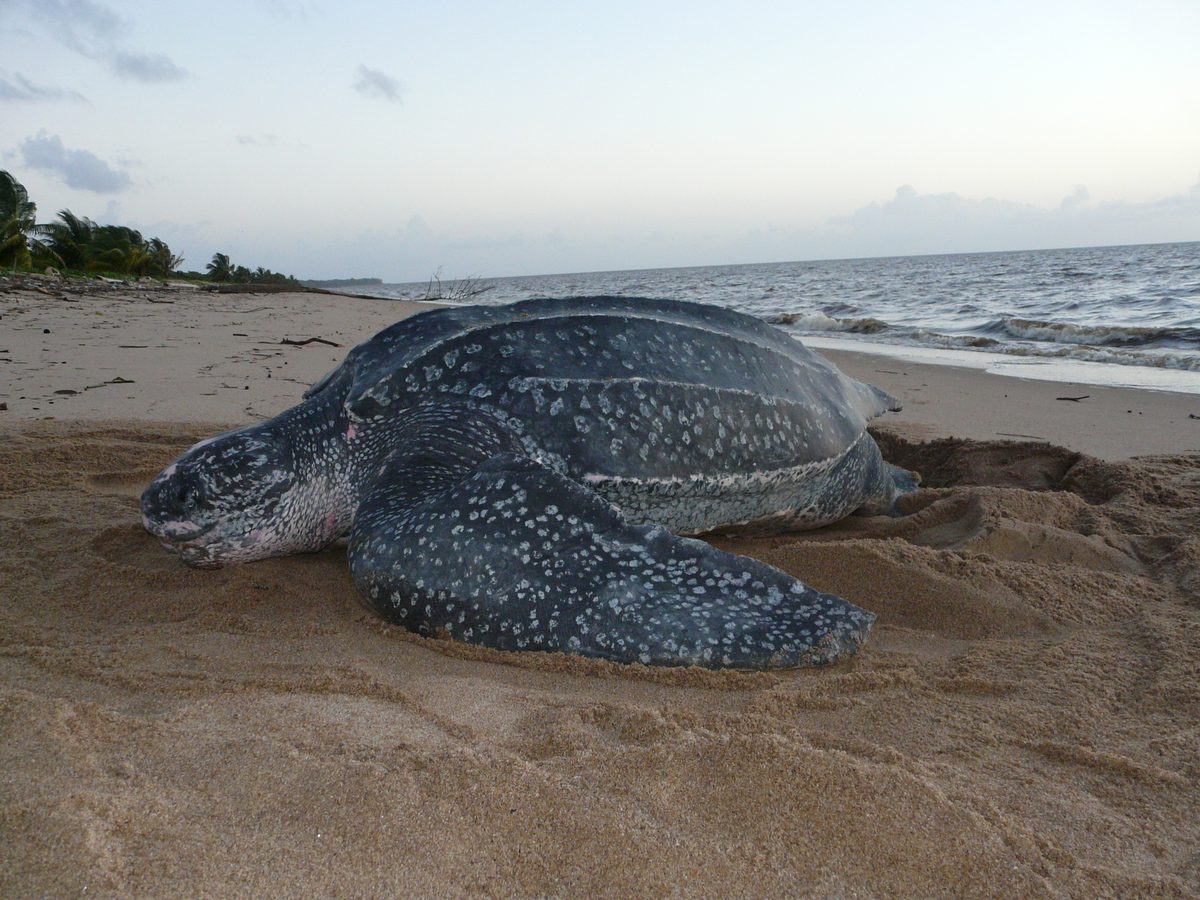
In all that blue swam one enormous turtle. She was longer than a tall man, dark as deep water, and her back was smooth and leathery, with seven ridges running down it like the seams of a boat.
Something was missing from her morning.
The sea near the surface was empty. The jellyfish, her favorite food, had drifted far down, into the cold where the light gives up.
Another sea turtle would have gone hungry. She took one slow breath and folded the sky away.
Down.
The water squeezed. A hard shell would have no give in it, but her leathery back could flex and yield, and that is one reason a leatherback can go where almost no other air-breathing animal goes. Down past the last green light. Down past 1,000 meters, into the black.
The cold reached for her and found her warm. Leatherbacks hold their own heat better than any other turtle, which is why she could hunt in seas where other sea turtles never swim.
And there they were. Jellyfish, drifting like soft lanterns in the dark.
Jellyfish are slippery food. Her throat is lined with backward-pointing spines, so everything she swallows travels one way only.
Down.
She ate until she was satisfied, rose gently back to the sky, and breathed.
Then she turned.
Not toward anything she could see. There was nothing to see. No road, no signpost, no coastline, only open ocean for weeks of swimming.
But sea turtles carry a compass inside them. They can feel the Earth's quiet magnetic pull, the invisible lines that wrap the whole planet, and they follow them the way you follow a map. That is her secret, and now it is yours.
It was time to go back. Back to the warm sands where she had hatched long ago, a place she had not touched since the night she was small enough to sit in a child's hand.
Some leatherbacks cross an entire ocean to reach their nesting beach, a journey of more than 10,000 kilometers.
So she swam. Day after day. Alone, as she had been since her first night.
Alone is different from lost. She was never lost.
One warm night, at last, she felt sand under her flippers. She hauled her great body up the beach, dug a deep nest with her back flippers, and laid her eggs, round and white as moons. She covered them with care, turned, and pulled herself home into the surf.
By morning the tide had smoothed the wide track she left behind, and the sea was only sea again.
But deep in the warm sand, something was already beginning. Dozens of tiny compasses, waiting for their turn at the blue.
The widest ocean belongs to those who trust what they carry inside. She trusted hers across the world and back.
Quiet things can hold the truest directions.