

Something was wrong inside the fallen log.
Nothing you could see. The log looked finished, soft with rot, sunk halfway into the leaf litter of a Central American rainforest.
But inside it, something was growing.
A grub, pale and curled, already longer than a grown man's hand, chewing slow tunnels through wood that had once been a tree's whole skeleton.
It had no horn yet. No wings. No name that mattered to the forest around it.
It only ate.
Rotting wood, mouthful after mouthful, through one wet season and then another, while beetles that were already grown flew overhead and never once looked down.
One year passed inside the log.
Then most of a second.
Nothing announced this. No leaf moved for it. The forest simply kept raining, and the grub kept eating, until one morning it stopped, and went still, and became something else entirely inside a hardened little room of its own making.
When it finally split that room open, what climbed out onto the wet bark was a beetle, curled and soft, wing cases the pale yellow green of new growth.
Not yet ready.
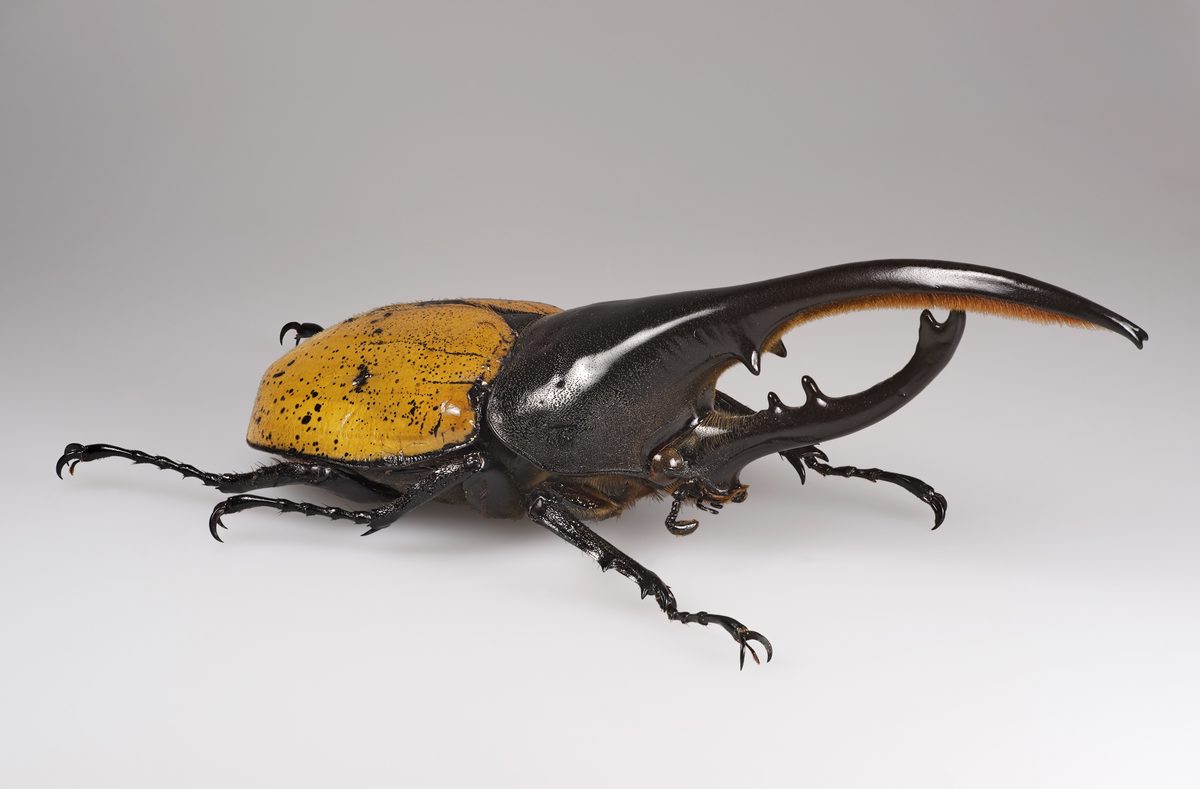
It waited on the bark while its shell dried and hardened around it, and while a horn grew forward from between its eyes, long and gently curved, reaching almost as far as its own body.
A rival beetle was already working the trunk above, at a seep of sap running down through cracked bark. A good feeding spot. The kind worth having.
He did not step back for the newcomer.
The new beetle climbed anyway, horn first, until the two of them stood close on the same strip of bark, and the older beetle lowered his head to meet him.
Their horns locked.
Not teeth. Not claws. A wrestling match built entirely from patience and leverage, each beetle trying to slide his horn beneath the other and lift.
The newcomer found his angle, tipped his horn up, and lifted the older beetle clean off the bark, tipping him backward off the branch and down into the leaf litter below.
He did not chase him.
He simply turned back to the sap, and fed.
Rain came that night, the way it always does in that forest, and where it struck his wing cases, the pale yellow green darkened toward black, patch by patch, until he wore the colour of wet bark instead of new leaves. By morning, dry again, he had turned back.
He fed on rotting fruit fallen from the canopy, and on the sweet seep of sap, through nights that were warm and short.
He did not have long. A few months only, out here in the open air, after two years of patient growing in the dark.
But the horn had done its work, and the feeding spot was his, and somewhere close by, in a log soft enough with rot, something else had already begun the same slow, invisible work.
Eating.
Waiting.
Becoming enormous, one quiet mouthful at a time.