

Peep.
Peep. Peep.
The sound was coming from under the sand.
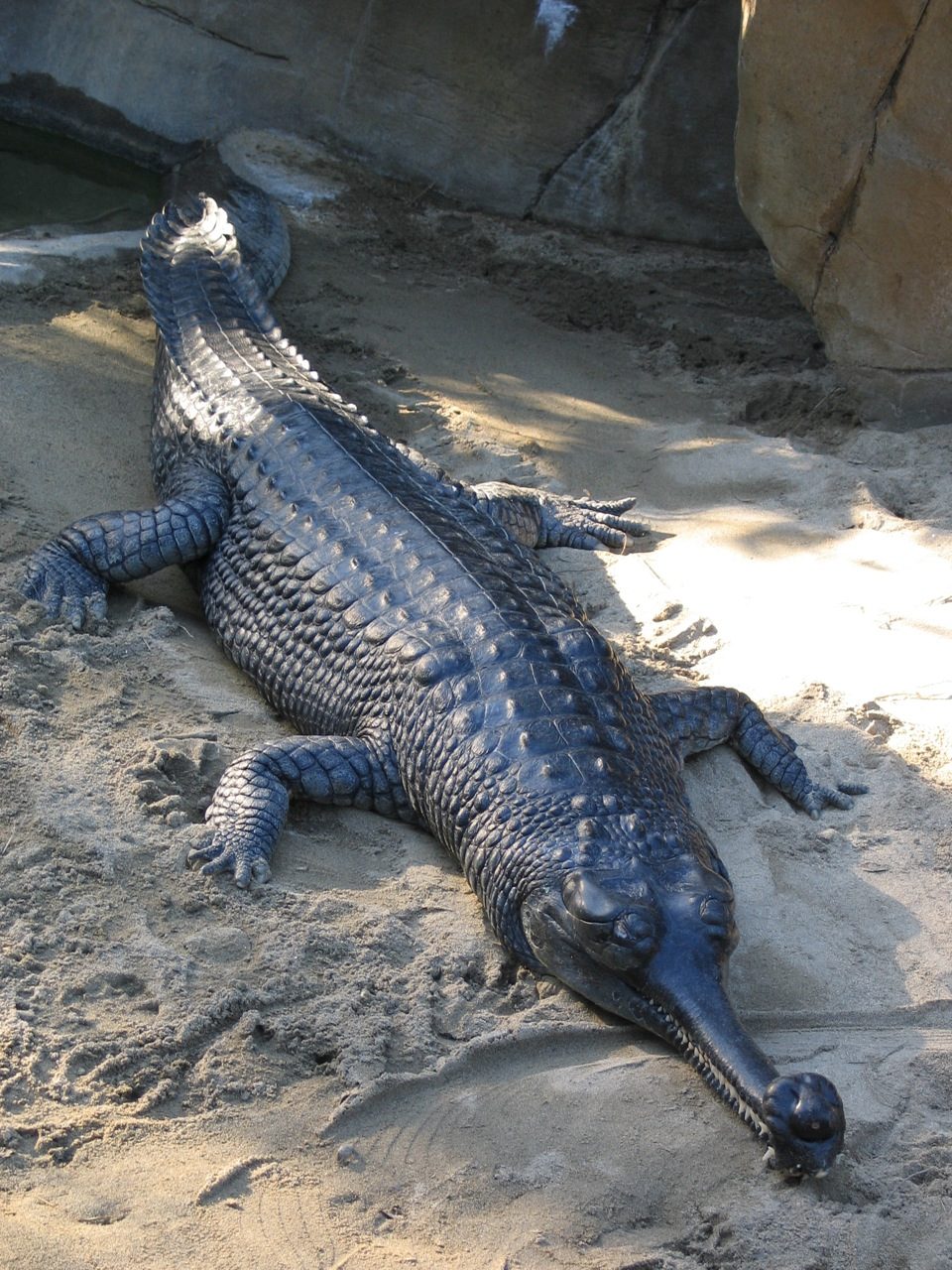
On a wide, slow river in northern India, a young gharial lifted her long thin snout and listened. The sandbank was singing. Tiny voices, dozens of them, then hundreds, calling from the nests the mothers had dug weeks ago.
"They are ready," said the old male, sliding off the bank on his belly, smooth as a canoe.
The young gharial had always wondered about him. He was longer than three of her put together, yet he ate fish, only fish, same as she did. His snout was even narrower than hers, a slim blade lined with more than a hundred needle-sharp teeth, built for one job: catching slippery fish with a quick sideways snap.
But it was the tip of his snout that puzzled her most.
He had a bump on it. A round, hollow knob, like a little clay pot. People along the river call that pot a ghara, and that is how the gharial got its name. Only the grown males have one.
"Why do you have it?" she had asked him once.
"Wait for the hatching," he said. "Then watch."
Now the hatching had come.
The mothers heard the peeping and began to dig, scooping away the warm sand until the nests opened and the babies spilled out, each one no longer than a school ruler, each one squeaking at the top of its tiny lungs.
They tumbled down the bank. They rushed into the shallows. Hatchlings from many nests, all mixed together in one wriggling, paddling crowd.
And the old male was waiting.
He floated low and still, like a long island. The hatchlings swam straight to him. They climbed his tail. They climbed his back. They lined up along his snout, little claws gripping, until he wore a hundred babies the way a hill wears houses.
He carried them through the warm shallows, day after day, while the mothers guarded the edges of the nursery, and everyone on the river learned one simple rule: the babies travel with the big one.
One evening, with the sun going down orange over the water, he pressed air through the pot on his nose and made his sound. A deep buzz rolled out across the river.
The hatchlings on his back went quiet, listening.
"That is my voice," he said. "When I speak, the whole river knows the guardian is here."
The young gharial looked at her own smooth snout and understood at last. The bump was a crown. The strange thing about him was the most important thing about him.
Somewhere under the first stars, a hundred small voices peeped themselves to sleep on their father's back, and the river flowed gently around them all.
The young gharial swam beside him all summer, guarding the edges, learning the work.
And if her snout stayed smooth forever, that was fine.
On this river, being different was simply another word for being needed.