

Something was wrong under the cracked red ground of East Africa.
The dry season had gone on too long.
Underground, in a maze of tunnels no wider than a drainpipe, a small worker felt it in her teeth before she felt it anywhere else.
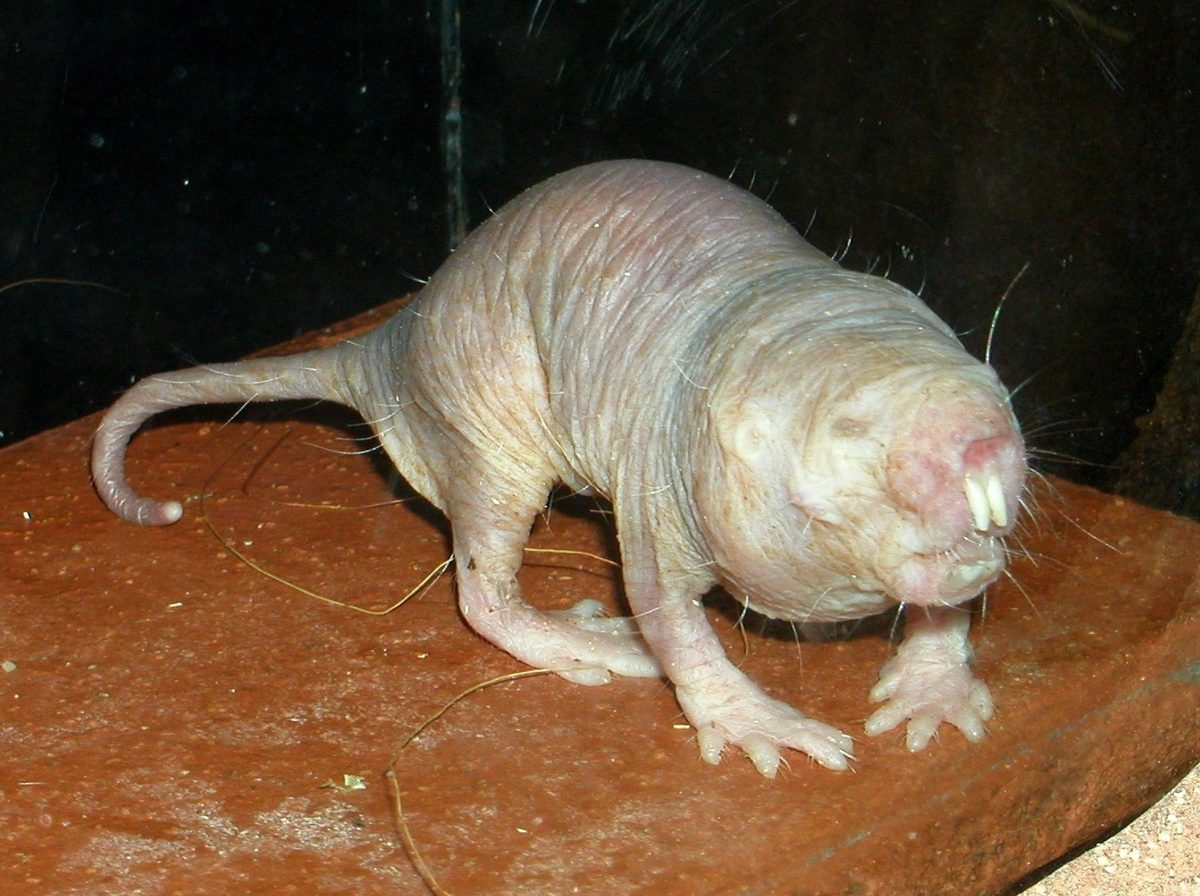
She was pink. She was wrinkled. She looked almost exactly like every sister around her, unless you knew to look for the one with the crooked whisker.
Nobody looked twice at her. Not even the queen.
That was fine. In this colony, only one female had pups. The rest dug.
Her front teeth grew outside her lips, so she could gnaw straight through hard soil without ever opening her mouth to it. She dug, and the worker behind her scooped the loose earth back, and the one behind that one scooped it further, a whole chain of sisters passing dirt paw to paw toward the surface.
Today the chain had stopped.
The tunnel ahead ran into a tangle of tuber roots, and the roots were guarding themselves the way some desert plants do, with a sting that burns anyone who bites down.
Two workers backed away, teeth aching.
She did not.
A naked mole-rat's body does not carry the signal for that particular burn. It simply does not arrive. So she went first.
She bit through the stinging root calmly, the way she bit through everything, and behind her the chain started moving again.
Deeper the tunnel went, past where the air thinned to almost nothing. Up on the surface, that thin air would have felled her in a minute. Down here, her small body slowed everything it needed to slow, and kept going on the little air there was, for longer than anything her size should manage.
Her own warmth was never really hers. It came from the tunnel itself, cool at dawn, warm by afternoon, and she simply matched it, the way the whole colony did, pressed together in sleeping piles to share what heat there was.
At the end of the tunnel sat a tuber the size of her whole body.
She gnawed a piece free and turned around.
Sister to sister to sister, the food went back down the chain, all the way to the round nest chamber where the queen was waiting, heavy with the next litter.
The queen ate. The colony ate.
Outside, the dry season did not care. It baked the crust of the world a little harder every day.
Underground, nobody minded. The tunnels held their own weather, and the mole-rats had already solved it, together, in the dark, without any one of them needing to be the one anybody noticed.
Years passed the way they do underground, unmarked by season, unhurried.
The worker with the crooked whisker kept digging.
The queen kept having pups, litter after litter, year after year, far longer than any queen her size had any right to.
Thirty years is a long time to spend in the dark. It is an even longer time to spend in a body that never quite learns to grow old the way small bodies usually do.
But that colony had never done anything the way anybody expected.
One queen. A hundred diggers.
And somewhere below the driest ground in Africa, still digging, still not stinging, still not tired.