
.jpg)
The little gecko had ridden inside a coil of ship's rope for longer than she could count in days.
When the rope finally came to rest, it rested on an island she had never smelled before.
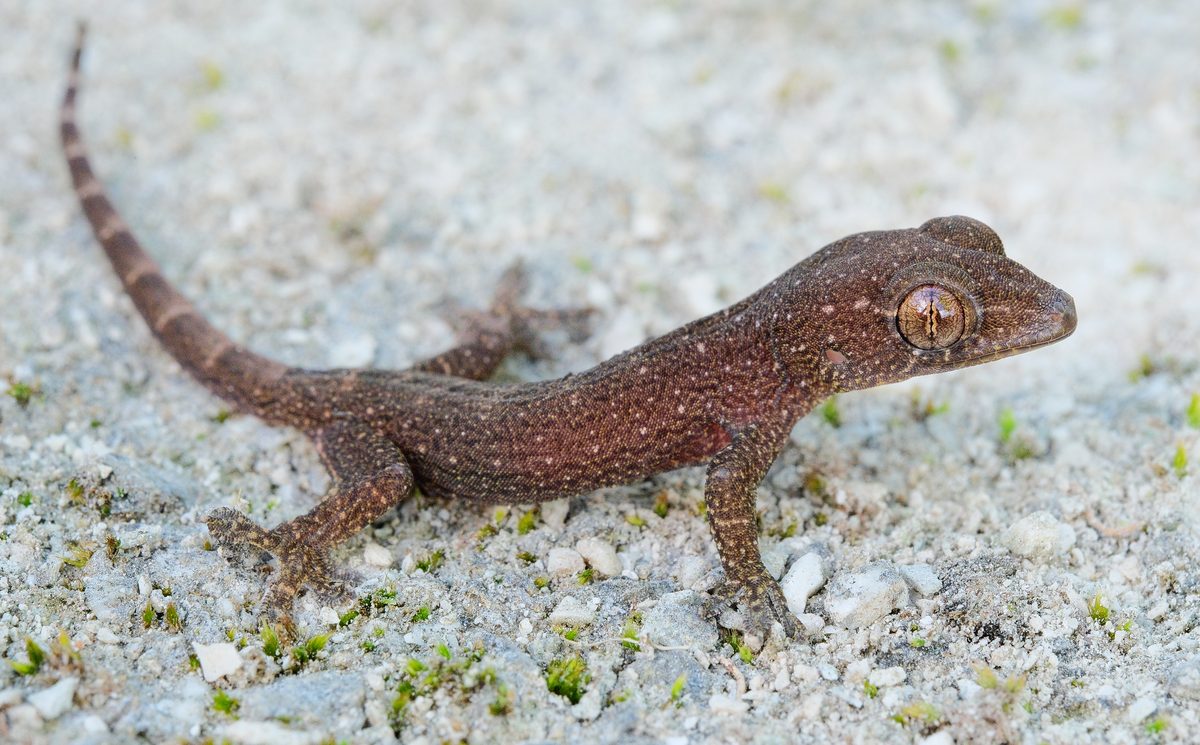
She was a mourning gecko, small, about 8 to 10 centimetres nose to tail, pale as candle wax with a dark stripe down her back like a closed eye. Almost every gecko of her kind is female, and she was no exception. She did not need to find a mate on this new island.
She had never needed one at all.
That was fortunate, because there was nobody else here to find.
She waited for dark, the way geckos have always waited for dark, and set off across a wall that smelled of salt and nothing familiar.
A porch light burned at the top of the wall, and around it, insects gathered the way insects always gather around a light left burning. She caught what she could and let the rest go, and low in her throat she made the small chirping squeak of her kind, a sound with nobody left to answer it.
Nobody answered.
She chirped again anyway. Some habits do not need an audience.
By the second week she had found the cracks in a wooden post, narrow and dry and exactly the right size, and there she glued a pair of eggs, one at a time, pressed firm with her chin until they held fast against wind and rain alike.
There was little to do now but wait.
She sipped nectar from the flowers that opened at dusk. She ate what insects came to the light. She grew a little bolder each night, walking further along the wall, because a wall with nothing hunting on it is a very safe kind of wall.
Then the eggs opened.
Two hatchlings, no larger than a fingernail, climbed free into a night they had never chosen and could not have known was new to anyone.
Each one was her.
Not her child in the way other animals have children. Her copy, whole and complete, carrying the exact same stripe, the exact same patience, the exact same small chirping call. A mourning gecko passes herself forward instead of dividing herself in half, and what climbed out of that crack in the wood was simply more of her, ready to begin.
She did not have to teach them where the light was. They already knew, the way she had always known.
By the dry season, the post held a dozen geckos. By the next wet season, the whole porch did, and the wall beside it, and the young palm at the corner of the yard.
Once, a gecko slightly larger and differently marked turned up among them, a rare male drawn along for reasons nobody on that porch could explain. He watched the colony with interest and fathered nothing, because on this island, fathering was never the job that needed doing.
The island had never held a gecko before that first coil of rope came ashore.
Now, on a warm night, the porch light draws a crowd, and every single one of them, if you traced the line back far enough, back through a hundred identical mothers, began as one small chirp with nobody left to answer it.
Somebody always answers now.