
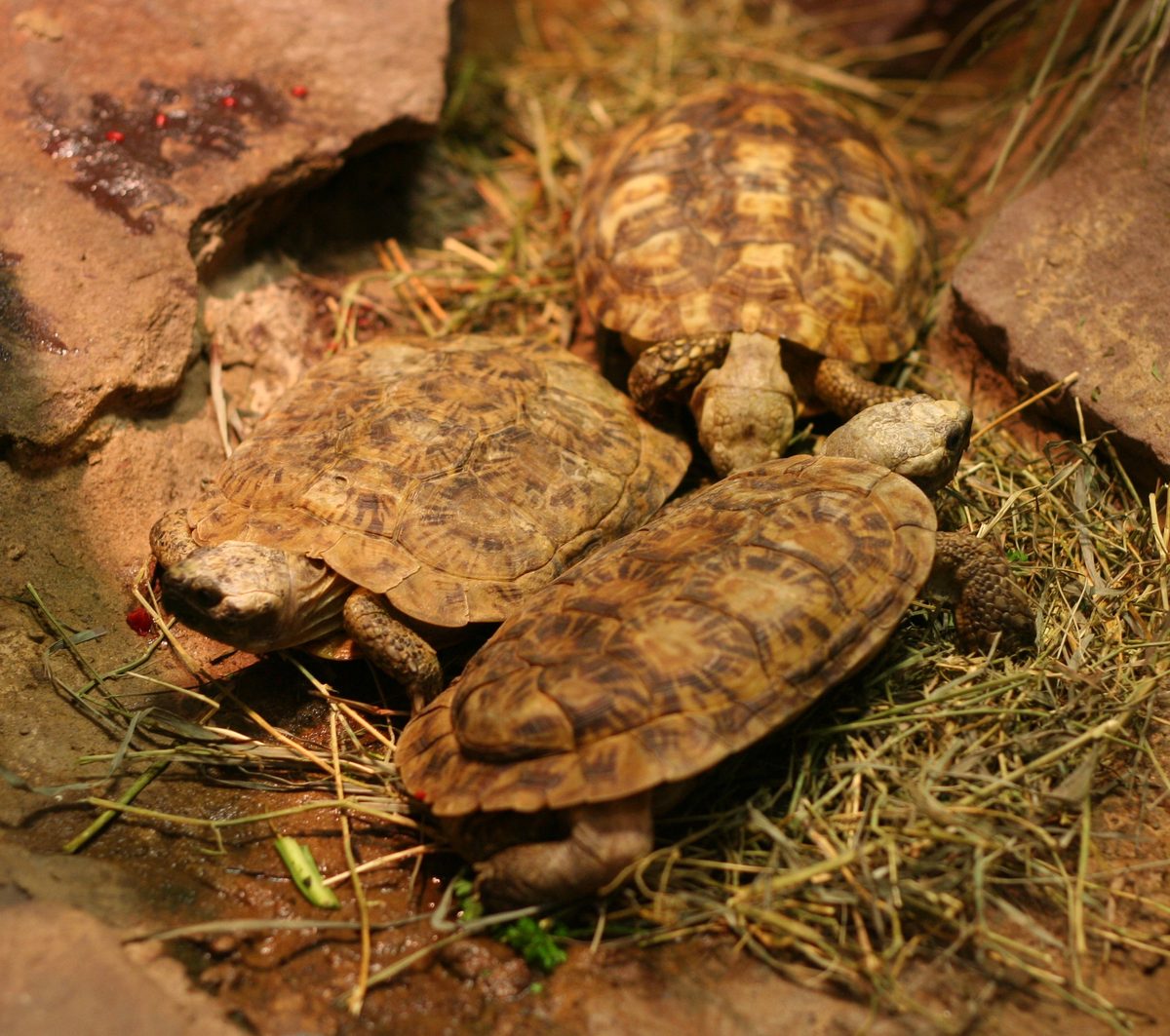

On the rocky hills of East Africa, there is a tortoise built wrong, and it works.
Her shell was flat. Almost as flat as a stone.
Thin enough to bend, if you pressed it. Thin enough that when she pulled her legs in, the way every sensible tortoise does when trouble arrives, nothing much happened. Her head stayed out. Her legs stayed half in view. The old trick that had kept tortoises safe for a very long time simply did not work on her.
She measured about 15 to 18 centimetres long, barely taller than a folded leaf, no more than a few centimetres off the ground, and she lived where the ground itself stood up in broken towers of rock, the kopjes of Kenya and Tanzania, cracked and stacked and full of shadow.
One afternoon, something with wings and no patience circled low over the rocks.
She felt it before she saw it. A change in the light.
Another tortoise might have pulled in and waited, trusting a shell to be enough.
Hers was not enough. So she did the other thing.
She ran.
Not a lumbering tortoise walk. A real scramble, legs working fast over broken stone, faster than anyone watching would have believed a tortoise could move, faster than her own shadow seemed able to keep up.
She knew this ground. She had grazed its dry grasses a hundred times, had climbed its warm faces a hundred more, claws finding holds a smoother foot never could.
Ahead, a crack opened in the rock, barely wider than she was.
She did not slow down to think about it.
She went in low and flat, and her thin, bending shell did the one thing a fat, domed shell never could. It flexed. It slid. It filled the gap completely, wedging her body between two slabs of stone so firmly that no claw, no beak, no amount of pulling from outside was going to move her.
Above her, the wings passed once, twice, and found nothing worth the trouble.
She stayed there a long while, breathing slow, feeling the cool stone against her flexible shell.
She was not the only one who had found this crack useful. Deeper in, in the dark, she could hear the small dry scrape of another tortoise, and another. A whole family of flat shells, folded into the mountain like something the rock had grown on purpose.
When it was safe, she came back out into the sun and went on eating the dry grasses that grew between the stones, unhurried now.
Later that season she laid a single egg, tucked into a warm crack of her own, and left it there. The mountain had never once failed to keep an egg warm, not in all the years her kind had trusted it.
A rounder tortoise, flipped onto its back, can rock itself upright again, using the curve of its own dome. Her shell had no curve to push against. Being flipped was a danger a rounder tortoise never had to think about, and one more reason she trusted her legs, and the nearest crack, more than she trusted her shell.
Nothing about her was built the way a tortoise is supposed to be built.
All of it was built exactly right.
Somewhere in the kopjes tonight, flat shells rest in stacks inside the old cracked rock, each one thin enough to bend, and none of them anywhere close to being caught.