
.jpg)
For as long as the old caiman could remember, she had the river to herself.
That was the wrong way for a river to be.
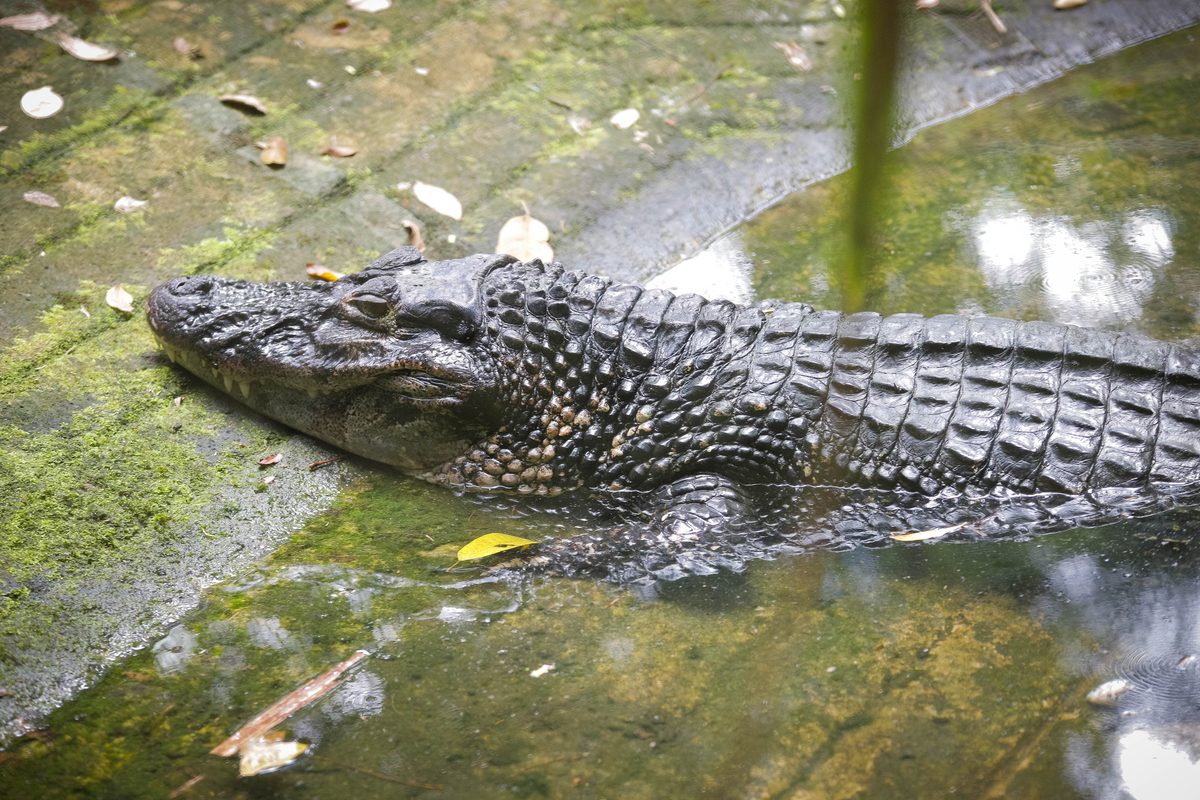
She was a black caiman, meant to grow to about 4 or 5 metres nose to tail, the largest hunter in the Amazon. Her scales were the colour of wet bark at midnight, dark enough to vanish the moment the sun went down. On a moonless night she could lie half sunk at the edge of the flooded forest and disappear completely, only two eyes above the waterline, waiting.
Waiting was easy. Waiting was what she was built for.
What was hard was the quiet.
Other stretches of water, her mother had told her once, used to hold caiman the way a night holds stars. This bend of black water had held only her, for longer than she cared to count.
She hunted anyway. She always had.
At dusk she slid into the current, and the current told her everything. A ripple that moved wrong was a catfish. A flash of silver in a hurry was a piranha, and piranha were easy, because piranha never expected the dark itself to have jaws. Once, at the edge of a sandbar, a capybara came down to drink and never saw her until it was far too late to matter.
She did not hunt because the river was empty.
She hunted because a black caiman always has, and always will, whatever the river holds.
One dry season, she hauled herself onto a bank of soft mud and did the other thing a black caiman does. She built. Leaves and broken reeds and mud, piled higher than her own back, patted firm with her tail until it stood like a small dark hill above the water. Inside it she laid her eggs, and beside it she stayed, because a mound nest without a guard is only a suggestion to every hungry thing nearby.
She lay across the entrance for the better part of three months and answered every curious nose with a hiss and a look.
Nothing came close twice.
Then one wet morning the mound moved, and out came a chorus of small grunting voices, and she carried them to the water one careful mouthful at a time, the way her own mother must have carried her.
The hatchlings ate insects. They ate snails. They kept close to the flooded roots where nothing large could follow, and she kept closer still.
That season, something new happened at the bend of the river.
Another shape slid into the water at dusk. Not hers. Smaller, darker still with youth, moving with the same unhurried confidence she remembered from her own first nights.
She watched it hunt. She did not chase it off.
The season after that, three shapes rested on the mud at dawn. Then five. By the time her own hatchlings were grown enough to build mounds of their own, the old caiman would lie in the shallows at dusk and count eyes across the water, small green lights, more of them every year.
She was very old now, older than most of her kind ever get to be, and she had outlived a river with nobody in it.
She had not expected to outlive that, too.
Some nights she still lay alone at the edge of the flooded forest, the way she always had. But she was never truly alone in the dark anymore. She only had to wait, and listen, and let the river answer.
One shadow had become many.
The river was exactly the way a river should be.