
_Scottsdale.jpg)
In 1799, a wooden ship carried a very strange parcel to England.
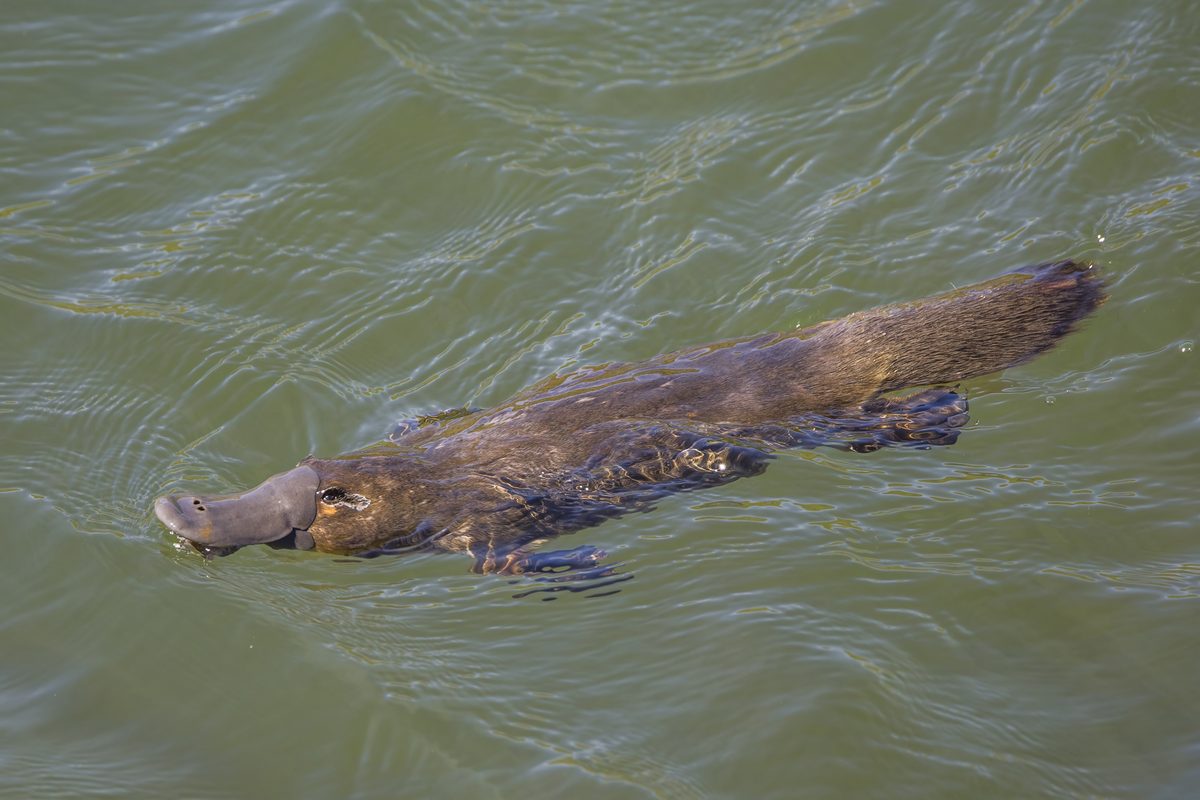
Inside was a dried animal skin from the rivers of Australia. It had thick brown fur, soft as an otter's. It had a flat tail, wide as a beaver's. And at the front, where a sensible animal keeps its snout, it had the rubbery bill of a duck.
The learned men passed it around.
They checked the bill for stitches. They checked the fur for glue. They felt certain that a sailor with a needle and a sense of humor had sewn a joke together.
"Impossible," they said. "There is no such animal."
Meanwhile, on the other side of the world, the impossible animal was having breakfast.
She slipped off a muddy bank into a creek in eastern Australia just as the sky turned pink. Her thick fur trapped a coat of tiny bubbles, so she glittered like silver as she swam.
Then she did her famous trick.
She closed her eyes. She sealed her ears. She shut her nose.
And then she went hunting.
Her bill was packed with thousands of tiny sensors, fine enough to feel the faint spark of a shrimp's flick or the whisper of a worm's wriggle. She swept her head from side to side, reading the dark water like a page.
A flicker. There.
The creek ran brown and cloudy after rain, difficult water for any hunter who trusts its eyes. She trusted electricity. Breakfast happened anyway.
She stuffed shrimp and wriggling grubs into her cheek pouches, floated up, and ground them to bits, because a grown platypus chews with tough pads instead of teeth. Then down again. Eyes closed. Ears sealed. Bill listening.
Deep in the bank waited her burrow, a long winding tunnel she had dug herself. Soon she would curl up there around two soft round eggs, holding them warm between her tail and her belly. And when her babies hatched, she would feed them milk that rises through a mother platypus's skin and beads there like dew.
Eggs, like a bird. Fur, like a bear. Milk, like every mammal. A duck's bill, a beaver's tail, and a hunter's sixth sense.
She was all of it at once, and entirely herself.
It took the learned men across the sea many years to believe in her. The platypus was in no hurry. Being real is patient work.
And she is still surprising everyone. Just a few years ago, scientists discovered that under ultraviolet light, platypus fur glows a soft blue green.
So if anyone ever tells you that you are too many things at once, remember the quiet swimmer in the brown creek: so is the platypus, and the platypus is doing beautifully.
Somewhere in a creek in Australia, as the sun comes up, a small silver shape closes her eyes and finds her way perfectly.