
,_NPSPhoto,_R._Cammauf_(9101584016).jpg)
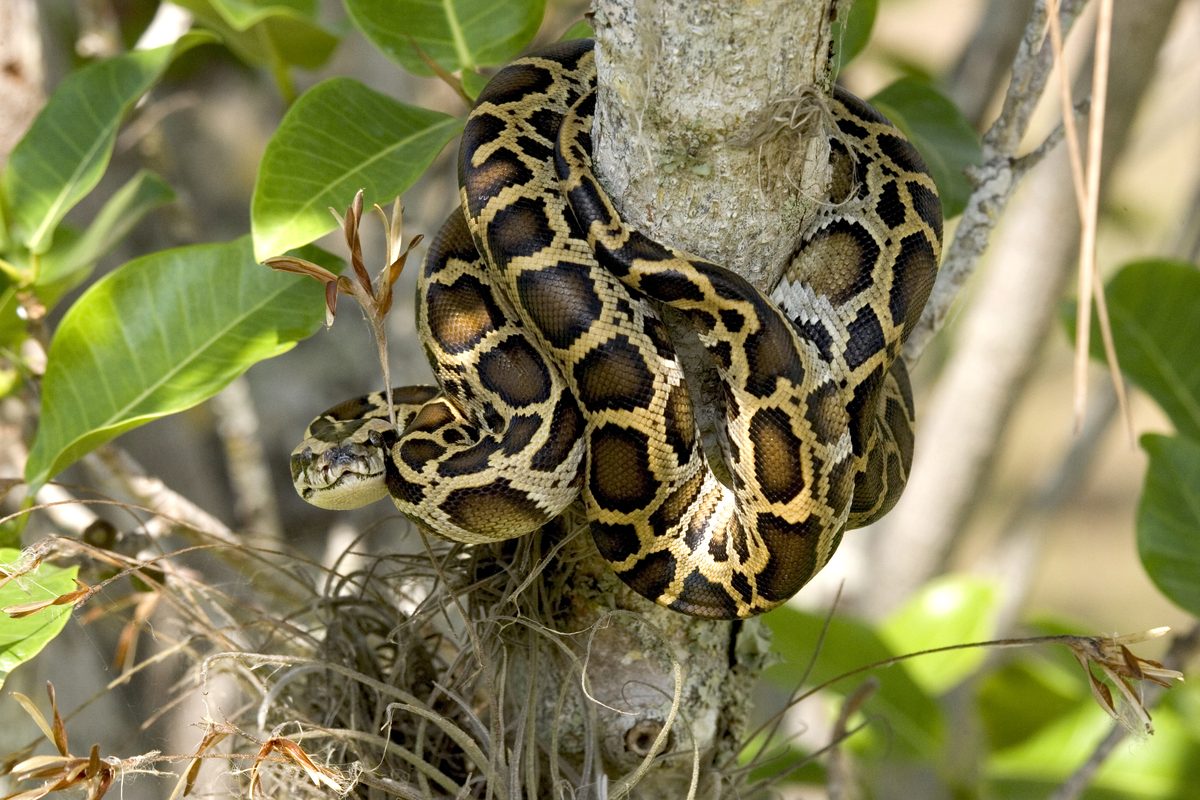
Deep in a forest in Southeast Asia, a python found a hollow beneath a fallen log and decided it was exactly right.
She was an ambush hunter by trade. Her whole life had been built from waiting: coiled in the leaf litter, patient as stone, until something warm-blooded wandered close enough to hold. She could grow to about five metres doing it that way. Waiting had never once failed her.
This waiting would be different.
She laid her eggs in the hollow, somewhere between thirty and eighty of them, pale and soft in the dark. Then she wrapped herself around the whole clutch, nose to tail, and went still.
The forest kept moving without her.
Rain fell. Rats scurried past close enough to catch. Once, a bird landed on the log right above her head, close enough to smell.
She did not move.
Hunger arrived first, the ordinary kind, and she let it sit. Then came a colder morning, and the eggs beneath her coils needed more than stillness. They needed heat.
So she shivered.
Not from fear. On purpose, small twitches running through her long muscles, again and again, the way a shiver keeps a person warm on a winter night. Each twitch cost her something. Each twitch gave the eggs a few more degrees than the cold air outside would ever offer them.
She kept shivering through the afternoon.
She kept shivering into the night.
Somewhere past the first month, her body had grown thin beneath her scales. The rats still passed. She still did not strike. An ambush hunter who eats nothing for two months is not failing at being a hunter. She is choosing to be something else for a while.
A warmer.
A wall between the cold and thirty pale eggs that could not shiver for themselves.
Days blurred into weeks. The rain came and went twice more. Her muscles ached with the constant small work of it, on and off, on and off, a rhythm nobody applauded and nobody saw.
Then one morning, something inside the hollow moved that was not her.
A small nose pushed against a small shell.
Then another.
By full light, the hollow beneath the log was busy with hatchlings finding their first breath of forest air, unwrapping themselves from the warmth that had held them since before they could feel it.
The mother python loosened her coils, slowly, the way a hand finally opens.
She was thin. She was tired in a way that had no name for a snake. And she watched her hatchlings taste the air for the very first time, each one already knowing, without being told, how to wait, how to hold still, how to become an ambush hunter in turn.
She had never once left them.
Not for food. Not for rest. Not even to stretch out fully beneath the sun.
Now she slid off toward the nearest stream, unhurried, already scenting for her first meal in two months. Somewhere behind her, thirty small warm bodies scattered into the leaves, carrying her patience forward into the forest, one shiver at a time.