
Something did not look right, moving through the ferns of ancient Texas.
It was the size of the walk that was wrong.
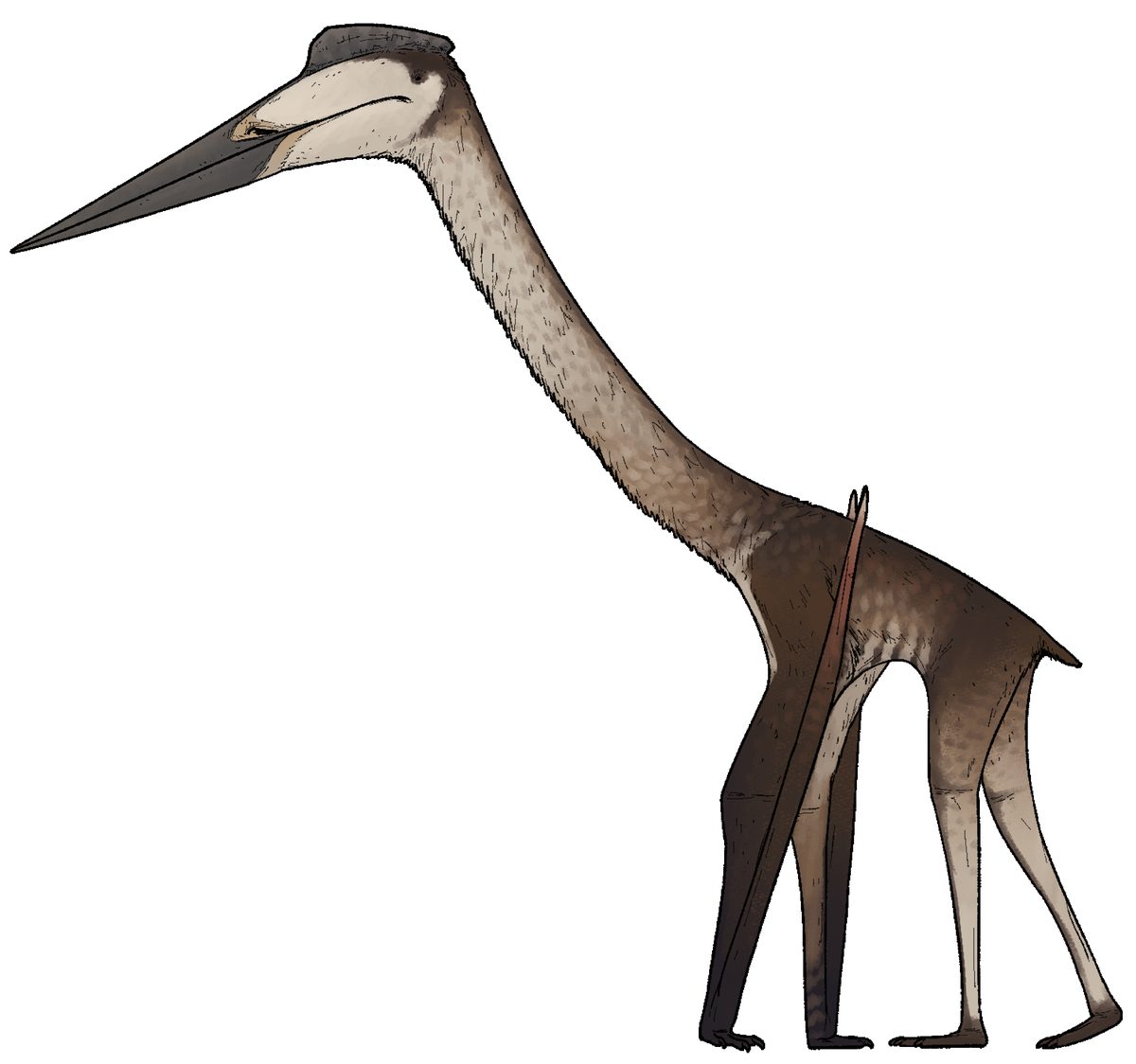
About sixty-eight million years ago, in warm river country near the end of the age of dinosaurs, a shape moved through the undergrowth on four legs, its front legs folded strangely, its neck long and stiff and held high, its head ending in a long beak with no teeth in it at all.
Standing there, folded up like that, it stood about as tall as a giraffe.
It was not a dinosaur. It was something else entirely, a flying reptile, and it carried the name of an old feathered serpent god who was said to move through the sky like a river of light.
But nothing about the walk looked like flying.
The small animals nearby had learned this much and stopped worrying about it. A little mammal crossed the open ground without hurrying. A group of hatchling dinosaurs fed nearby and did not lift their heads.
Too big, they seemed to think. Too heavy for the sky.
The giant strider did not correct them. It simply walked, the way a heron walks, patient and precise, watching the ferns for the twitch of something small.
Its bones, though, held a secret none of them could see. Under that great bulk, its bones were hollow, built light the way a bird's are, strong walls wrapped around mostly air. A body that heavy did not have to weigh what it looked like it weighed.
It found a meal low in the reeds, snatched it up in that long toothless beak, and swallowed it whole, the way a great patient bird might.
Then it did what none of the small animals watching had ever seen it do.
It planted its folded front legs hard against the ground, and vaulted.
Both wings, folded flat a moment before, snapped open on the way up, and what had looked like a walking stick became a sail eleven metres from tip to tip, wide enough to shade half the little clearing at once.
The mammal froze. The young dinosaurs finally looked up.
Scientists think an animal that size could not simply flap upward the way a sparrow does. It needed exactly that kind of running vault, wings catching the air only once the arms had already done the hardest part of the lifting.
And then it was airborne, and the ground shape that had fooled everyone all afternoon was gone, turned into something else entirely against the clouds.
Scientists think it could ride the warm air for long stretches without much effort at all, covering wide country on wings that size, though nobody living was there to time it, and nobody needs the number to know what mattered.
Down in the ferns, the young dinosaurs watched the shadow slide over them and pass.
It did not come back that day. It did not need to.
Somewhere over the river, tall as a giraffe on the ground and wider than most rivers in the sky, it flew on unhurried, wearing a god's old name a little more honestly with every wingbeat.