
_male_-_Flickr_-_berniedup.jpg)
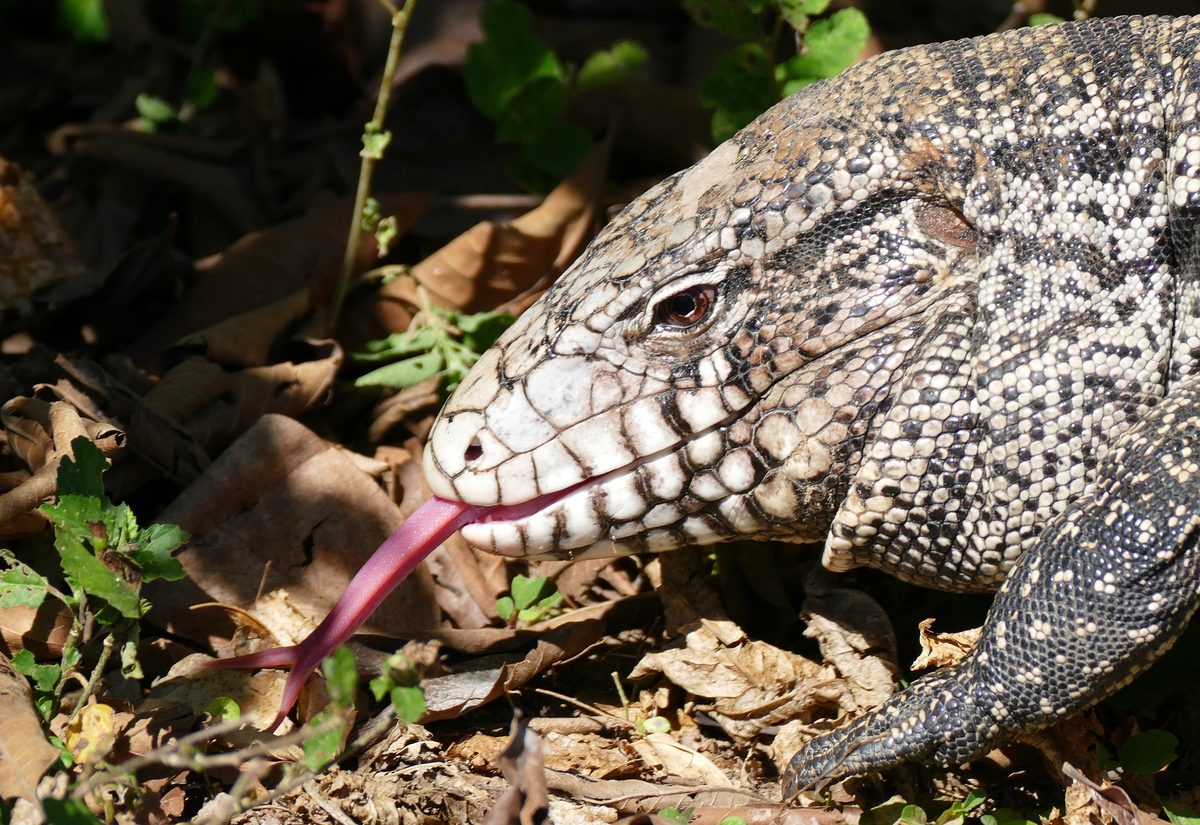
Deep in a burrow in the grasslands of Argentina, a tegu unfolded herself from months of stillness.
Winter had asked her to disappear for a while, and she had. She had spent it curled underground, barely breathing, barely anything, while the world above went cold and quiet.
Now something had woken her early. Not the sun. Not yet.
Something inside.
She noticed it before she even reached the surface. Her own body, warm, warmer than the tunnel around her, warmer than it had any reason to be in the grey hour before dawn.
She was not the only tegu waking that week. But when she pushed up through the loose soil into the pale light, the other lizards nearby, the small quick ones sunning on stones, were still slow with the morning chill, waiting for the sun to do the work for them.
She did not wait.
She moved through the grass while dew still sat cold on every blade, hunting the way she always had. A beetle here. A fallen fruit there, soft and sweet from the last of summer. An egg, forgotten in low brush by some bird that had not counted well. She ate what the season offered, because a tegu takes what is there, and this was hers to take first.
For a few weeks, spring belonged to her before it belonged to anyone else.
She found a low rise of ground near the treeline and began to build. Leaves, grass, soil, mounded higher and higher, a low warm hill under the open sky. She worked in the cool mornings when smaller lizards were still hidden, and by the time the sun climbed high enough to reach the rest of the grassland, her mound already stood finished.
Into it, she laid her eggs. Then she stayed.
Many reptiles lay their eggs and leave. This tegu stayed close.
She curled near the mound through the long weeks that followed, and the warmth that had carried her through the cold spring mornings faded the way it always did, a few weeks and no more, her body settling back into the ordinary rhythm every reptile knows, warm by day, cool by night.
But the mound kept its own warmth a while longer, the leaves inside it slowly rotting into a gentle heat, and she guarded what it held.
She chased off what needed chasing. She rested when nothing did. Days folded into more days, the grassland turning fully green around her without her ever hurrying to catch up to it, because she never had to.
When the mound finally stirred, small heads pushing up through leaf and soil into their first sunlight, she was still there.
She had woken before the world that spring, alone in her own private warmth while everyone else waited for the sky to provide it.
Now the world had caught up. A whole clutch of it, blinking in the grass beside her.
She watched them find their feet, unhurried, the way only something that has already done its hurrying can be.