
_displaying.jpg)
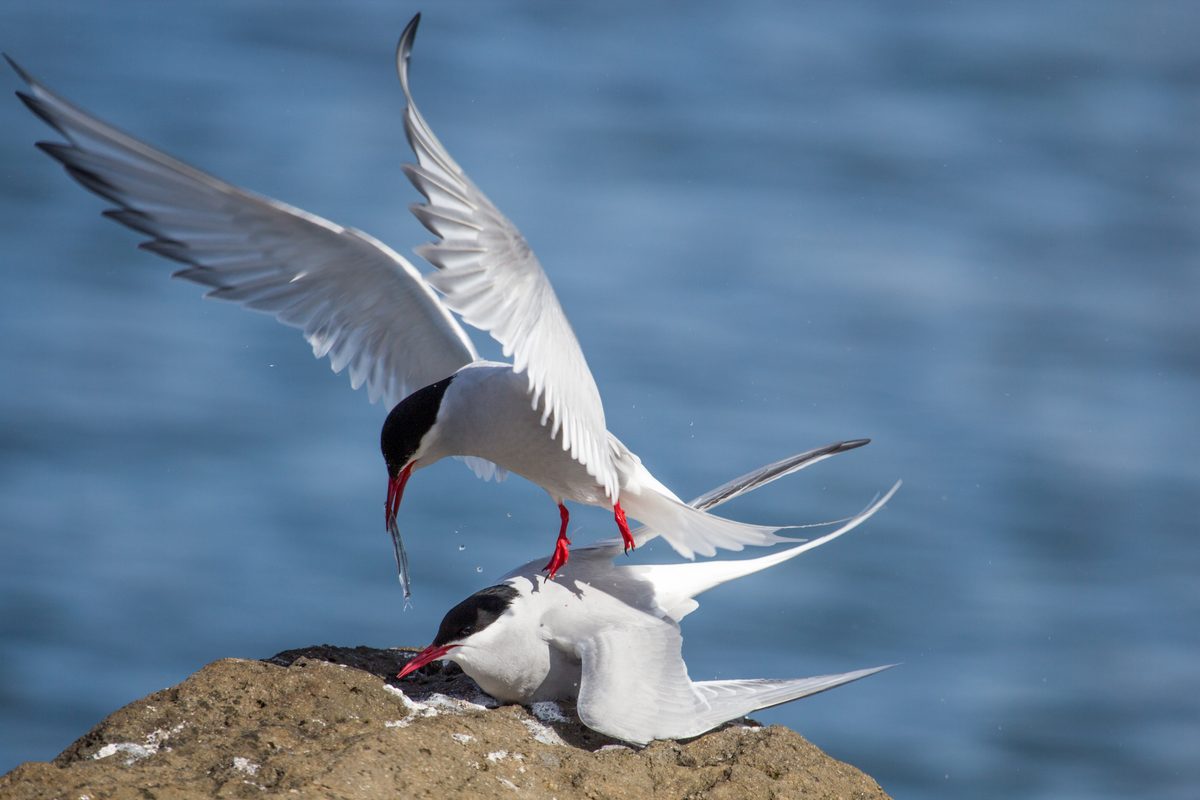
Something in the light was changing, and the chick on the rocky Arctic ledge did not like it.
The days had begun arriving shorter than they left. Evening was coming at an hour when, all her short life, the sun had still been standing high overhead.
She weighed about as much as three eggs, wrapped in soft grey and white down, with a bill only just beginning to blush toward red.
She did not yet know why the light mattered so much.
Below the ledge, a hungry gull had drifted too close that morning, and both her parents dropped out of the sky at once, screaming, wings folded to knives, driving it off the rocks before it came anywhere near her. That was what a tern's nest earned here: no mercy for intruders, and everything for the chick.
Watch.
Wait.
Grow.
At about three weeks old, her wings finally held her, and she left the ledge on a morning so bright it barely counted as night at all. Up here, in the short northern summer, darkness hardly bothered to arrive.
Her first dives were clumsy, a hover, a drop, a splash, and no fish. The older terns did not slow down to wait for her.
Then one hover held steady long enough, and a small fish rose to meet it, and that was that.
The next week, when the flock lifted off the ledges together, nobody left her behind to practise alone.
She was one of them now, and no one had needed to say so.
Then the light kept changing, faster every day, until the whole colony rose at once and turned toward open water, and she went with them, because staying meant staying in the dark.
She flew for weeks. Grey sea below, grey sky above, and somewhere out past the edge of both, more summer waiting.
She crossed oceans she had no name for, hovering over the swells to snatch small fish when her wings ached for rest, and when a gale finally found her over open water, she turned into it and kept her wings working until it passed, because a bird built for two poles is built first for weather.
By the time she reached the ice at the bottom of the world, the sun there had not set in weeks either.
Summer, again, on the other side of the planet, arriving right on schedule to meet her.
Other wings had made this same long crossing before hers. The sky above the southern ice was full of grey and white feathers, and none of them looked surprised to see each other.
Winter never really found her. She had simply flown around it, pole to pole, chasing daylight the long way, one of the only creatures alive that lives inside two summers every single year.
She would make this same crossing again next season, and the one after, for something close to thirty years, and each trip added its own long thread of ocean to the one already coiled behind her.
Add them up, at the end of a long life like hers, and the sum could carry a bird from the Earth to the Moon, and back again, three times over.
She never counted it that way.
She only ever counted the light.