
Something was wrong at the edge of the savanna, and the father noticed it first, because he noticed everything first.
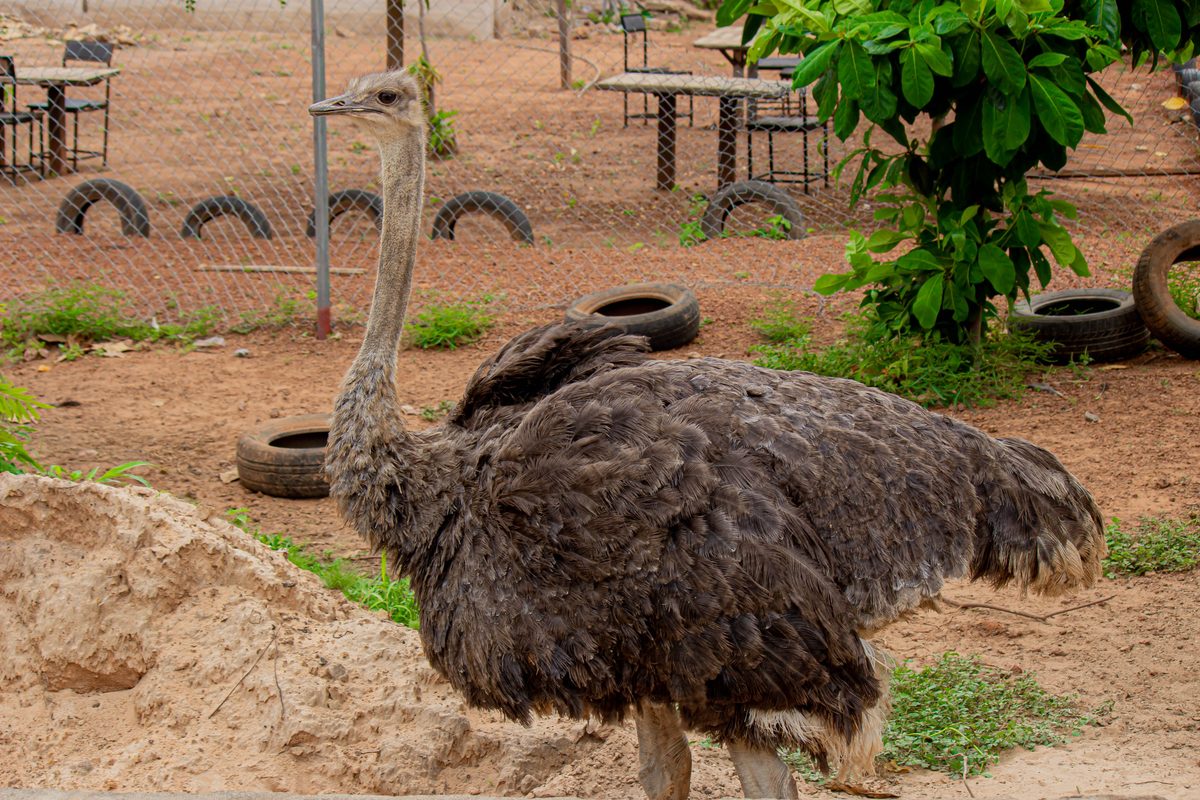
An ostrich stands taller than almost any bird alive, up to about 2.7 metres from his flat feet to the top of his small, watchful head, and his eyes are the largest of any animal that walks on land. Each one is about five centimetres across, wider than his own brain, and very little on the open grass escapes them.
He could not fly. His wings were built for something else, held out wide for balance when he ran, or spread and shaken to show off, or to shade his eggs on the hottest afternoons. People sometimes called that weakness.
He knew better.
Buried in a shallow scrape of sand behind him sat a nest of eggs laid there by several hens who shared this patch of ground, along with the eggs of the one hen who ruled it beside him. Guarding that nest was work he shared with the hen who ruled it beside him, night watch and day watch passed between them, until his legs ached from standing still.
Then, out past the acacia scrub, something moved.
A jackal. Circling. Not close enough to strike, not yet, just close enough to test whether anyone was watching.
Someone was.
He did not charge. Not yet. He watched the jackal pace a slow, hungry loop, and he let it believe, for one dangerous moment, that the nest was unguarded.
The jackal crept closer.
He moved.
Two toes on each enormous foot met the ground and pushed, and pushed again, and within a few strides he was faster than anything else on that whole stretch of grass, faster than any other animal on two legs anywhere on Earth. The jackal broke into a run out of pure surprise, and the father let it run, herding it well clear of the nest before circling wide and trotting home unhurried, as if nothing at all had happened.
It happened again the next week. And the week after that.
Each time, the outcome was the same. Each time, the jackal came a little less certain, and left a little sooner.
Between the chases, there were quieter hours. He plucked at tough grass and the occasional beetle, and swallowed small stones along with his meals, keeping a little quarry inside himself to grind the toughest bites down to nothing, the way a bird with no teeth must.
One morning the first egg in the nest began to rock.
It took the whole day, and most of the father's patience, before a damp gray chick finally worked its way free into the sun, blinking eyes already large for its size, legs already long enough to stand.
He looked at that chick, barely as tall as one of his own folded wings, hatched from an egg heavier than a bag of flour, the biggest egg any living creature lays.
By evening there were a dozen chicks stumbling around the nest, and the father stood over all of them, watching the grass line the way he always had, wings spread just wide enough to throw a little shade.
Flightless was never the right word for him.
He simply kept both feet on the ground, because the ground was exactly where he needed to be fastest.