
.jpg)
She had walked the same track through the low scrub every spring, and every spring, he had been waiting somewhere along it.
This spring, the track was empty.
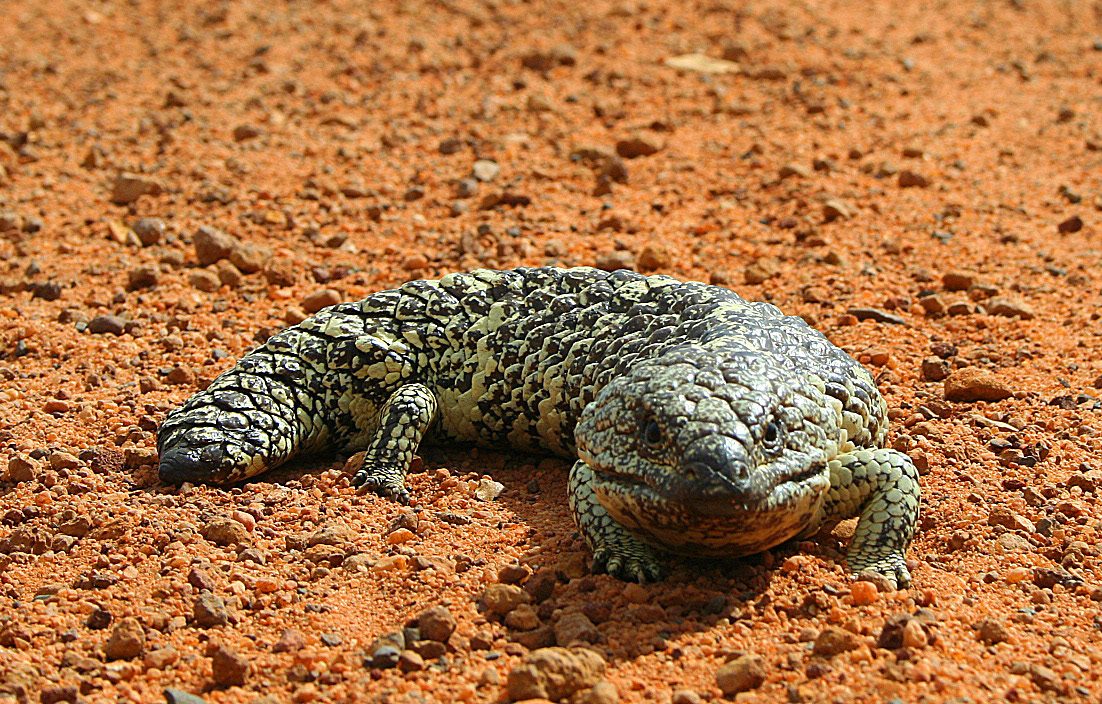
She was slow, always slow, an armoured skink built low and rough, with scales stacked over each other like the shingles on an old roof. Southern Australia in spring smelled of new flowers and turned earth, and normally that smell was enough to bring her walking, and him too, from wherever winter had kept him.
She had her own way of covering ground. Not fast. Steady.
Behind her, a short stumpy tail carried the shape of a second head, blunt and heavy, holding the fat she had saved through the cold months. More than one hawk had swooped at that tail thinking it was the front end, and left confused, and she had lived through every one of those mistakes.
But a fooled hawk was not today's problem.
Today's problem was a track with nobody on it.
She kept walking anyway, tasting the air, checking the low plants for the flowers and snails that made a slow spring breakfast, and by midmorning she had crossed the same stretch of ground three times.
Nothing.
Then, near a fallen branch she remembered from other years, the grass had been pressed flat in a line she knew.
His line. Low and wide, the same unhurried drag a shingleback leaves behind.
She followed it, unhurried herself, because unhurried was the only speed she owned.
The line grew fresher.
Around a stand of low bush, something large and armoured sat exactly where the sun had first reached the ground that morning.
He did not rush toward her either. Shinglebacks do not rush toward anything.
He turned, slow as a shadow moving, and for a moment neither of them did more than look.
Then a bird dropped low over the clearing, curious about the two dark shapes in the grass, and both skinks opened their mouths at once and answered with tongues the color of a clear afternoon sky.
The bird lost interest and left.
They closed their mouths again, side by side now, and simply walked. Not fast. Together.
This was the twelfth spring she had found this same low shape waiting somewhere along this same worn track, or found her own way to him when he was the one who arrived first.
Neither of them counted it that way.
There was only the scrub, and the flowers coming up early this year, and a partner who mattered enough to be looked for on a track gone quiet.
By evening they had eaten their fill of snails and soft new growth, and settled together under the same low bush, tail to tail, two blunt shapes that had confused hawks for years and never once confused each other.
Spring had found them both again.
It always had.